

Emotional dysregulation can make feelings rise quickly and feel difficult to manage for adults with ADHD. Emotional regulation strategies for adults with ADHD can help you notice a strong reaction, pause, and choose what to do next. The aim isn’t to suppress emotions, but to respond in ways that fit your needs and goals.
If frustration, overwhelm, or hurt sometimes affects your decisions or relationships, understanding the patterns behind those moments can help. Emotional changes associated with ADHD can differ from mood disorder episodes, so noticing when feelings arise and how they affect daily life is useful.
This article explores common emotional regulation challenges and practical ways to manage them. You’ll learn how self-monitoring, cognitive behavioural therapy, and executive functioning supports can help with task paralysis, time blindness, and difficulty following through.
Key Takeaways
• Notice what happens before an emotional reaction, including body signals, situations and unmet needs.
• Look at how quickly emotions shift and how long they last to better understand what you are experiencing.
• Use brief self monitoring to spot recurring triggers and choose a response that supports your goals.
• Apply CBT tools to question unhelpful assumptions and make overwhelming tasks feel more manageable.
• Build practical routines around time, sleep and movement to support emotional regulation and daily functioning.
What Is Emotional Dysregulation in ADHD?
Emotional dysregulation means finding it difficult to moderate a feeling, shift attention away from it, soothe yourself, or organise a response. In adult ADHD, a delayed reply or sudden change of plans can bring a fast, intense reaction. A 2019 European Psychiatric Association consensus statement listed emotion dysregulation as one of six fundamental features of ADHD in adults. The feeling is real, even if your first interpretation of the situation needs a second look.
This is not simply “being too sensitive”. Impulsivity and executive functioning difficulties can make it harder to pause, especially when you are tired or under pressure. For example, task paralysis before a deadline may lead to self-criticism, followed by snapping at someone who offers help. Noticing the chain of events can help you spot pressure earlier and choose how to respond.
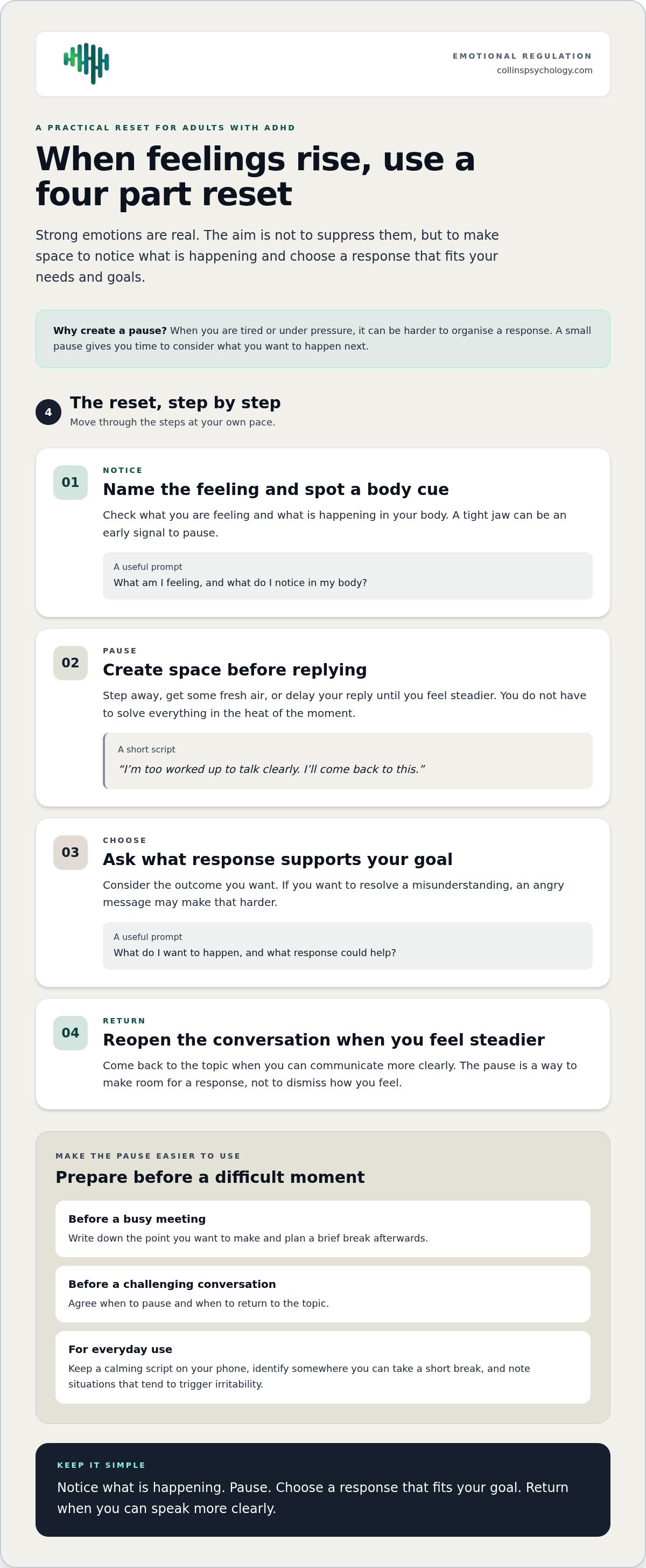
When anger starts rising, create space before replying. Step away from the conversation, get some fresh air, or use a short script such as, “I’m too worked up to talk clearly. I’ll come back to this.” Then consider the outcome you want. If you want to resolve a misunderstanding, an angry message may make that harder. Pausing gives you time to consider the consequences without dismissing your anger.
A quick reset for an intense moment
Notice
Name the feeling and any body cue, such as a tight jaw.
Pause
Step away or delay replying until you feel steadier.
Choose
Ask what response best supports your goal.
Return
Reopen the conversation when you can communicate more clearly.
Emotional sensitivity may also show up as crying, feeling rejected, or becoming overwhelmed by noise and competing demands. Try writing down what happened, reducing sensory input, or taking a gentle walk before deciding what to do next. A tight chest or warm face can be an early signal to pause. You can find further ideas in this guide to ADHD emotional regulation.
Anticipatory coping means preparing for a situation you expect to find difficult. Before a busy meeting, write down the point you want to make and plan a brief break afterwards. For a challenging conversation, agree on when to pause and when to return to the topic. These practical ADHD coping strategies reduce the decisions you need to make when emotions are intense.
Keep the plan simple enough to use. Save a calming script on your phone, identify somewhere you can take a short break, and note situations that tend to trigger irritability. With practice, these steps can help you pause, consider likely consequences, and respond in line with what matters to you.
Differences between ADHD-related emotional shifts and mood disorders
Timing can offer a useful clue, but it cannot diagnose the cause. ADHD-related emotional shifts may fluctuate within a day, often following frustration, criticism, or a sudden change of plan. Mood disorder episodes may last days or weeks. A difficult morning followed by a calmer afternoon may differ from a sustained change across several days, but patterns need careful consideration.
ADHD, or attention deficit hyperactivity disorder, can affect emotional regulation alongside attention, impulsivity, and executive functioning. An email that seems critical may trigger hurt, then anger, followed by relief after clarification. A mood disorder can involve longer-lasting changes in mood and functioning. Both patterns can occur together, so do not assume every emotional reaction is due to ADHD alone.
Stress responses may help explain why a small event sometimes feels enormous. The amygdala acts like an internal alarm, prompting cortisol release and adrenaline production when the brain detects a threat. When this alarm is on high alert, information may be harder to process through the brain’s rational thinking systems. For example, a delayed reply can feel like rejection before you have enough information to interpret it.
Relationships can feel the impact of emotional dysregulation. A partner’s reminder about an unfinished task may be heard as blame, prompting a defensive response; later, you may regret the words. Repeated misunderstandings can affect trust and mental wellbeing. Nearly half of adults with ADHD are treated for depression at some point in their lives, and more than 50% have an anxiety disorder. Those figures underline why persistent distress deserves attention, not self blame.
When should an adult with ADHD seek professional help for emotional dysregulation? Seek support if emotional reactions affect your relationships, work, or daily life. Raise persistent low mood, anxiety, or marked changes in behaviour with a qualified health professional.
What ADHD emotional regulation supports and services are available in Ireland? Support can include cognitive behavioural therapy, practical ADHD-focused emotional regulation tools, and structured online learning. Choose support that helps you understand patterns and practise skills in everyday situations.
What daily routines, sleep, exercise, or nutrition changes may support emotional regulation in adults with ADHD? Track your mood alongside sleep, meals, movement, and screen breaks to notice useful patterns. Regular meals, adequate sleep, and exercise can support stress tolerance. A short walk after a difficult workday may help you reset.
Social support can make these steps easier to use. Tell someone you trust what helps during a tense conversation, such as pausing before replying or setting a clear time to return to the topic. If you are parenting while managing ADHD, a simple shared routine for busy mornings may reduce last-minute stress. Tracking the situation, emotion, and response gives you specific examples to discuss when seeking support.
Self-monitoring emotions and reactions
Self-monitoring helps you notice how an emotion develops instead of judging yourself afterwards. When frustration arises, make a brief note on your phone. Record the situation, emotion, body sensations, and what you did next. For example: “Meeting changed, anxious, shoulders tight, left without asking why.” This turns a confusing reaction into useful information.
Start with physical clues. A clenched jaw, warm face, or racing heart can signal rising tension before you speak sharply. Name the feeling plainly, such as “I’m embarrassed” or “I feel overwhelmed.” Pausing helps separate the emotion from your next action. ADHD symptoms can make it difficult to shift attention, so a written prompt may be easier than remembering several steps.
The RAIN method offers a simple structure: notice the emotion, allow it to be present, investigate what is happening, and respond with care. After receiving brief feedback, for example, you might notice hurt, allow the feeling without replying immediately, and ask what the feedback actually said. Grounding through the five senses can also bring your attention back to the present: name what you see, hear, and feel around you.
Self-soothing can involve a quiet room, slow breathing, gentle movement, or a familiar comfort routine. If you feel close to tears after a demanding day, reduce noise and check basic needs such as food, rest, and a break. Co-regulation means settling alongside a calm person. You might say, “I’m upset and need you to listen for a minute, not solve it yet.”
Notice the self-talk that follows a difficult moment. “I always ruin things” turns one mistake into a verdict about your character. Try a more balanced statement: “I interrupted during the meeting, and I can clarify what I meant.” This is not forced positivity. It acknowledges the behaviour while leaving room for repair and a different response next time.
Rejection sensitivity can make an unanswered message feel like proof that someone is angry. Write down the observable fact, then list another possible explanation, such as the person being busy. Understanding rejection sensitivity can help you separate an intense feeling from a confirmed conclusion.
Review your notes weekly and look for patterns, such as frustration after back-to-back meetings or missed meals. Choose one small adjustment to test, like setting a reminder to eat before an afternoon call. If emotions continue to disrupt daily life, bring these examples to a clinical conversation about treatment and support. An ADHD diagnosis involves more than emotional reactions alone, so clear examples can help explain what is happening.
Cognitive behavioural therapy
Cognitive behavioural therapy, or CBT, helps connect a situation with your thoughts, feelings, and actions. This can be useful when ADHD-related overwhelm makes a setback feel impossible to recover from. Emotional regulation strategies for adults with ADHD can include examining the thought that intensifies a feeling. After missing a study deadline, for example, you might think, “I’ve ruined everything,” and then avoid opening your course materials. CBT helps you test that thought and choose a manageable next action.
Try a simple thought record after a difficult moment. Write down what happened, the first thought that came to mind, the feeling it brought, and what you did. Then ask, “What facts support this thought, and what facts don’t?” If a lecturer has not replied, the fact is that there is no reply yet. “They think I’m incapable” is an interpretation, not confirmed information. This process can make emotional regulation strategies for adults with ADHD easier to apply in real situations.
CBT addresses behaviour as well as thinking. If task paralysis stops you starting an assignment, make the first step specific: open the document and write one rough sentence. Set a reminder to return after a short break instead of waiting to feel fully motivated. Breaking work into visible actions can reduce mental load and help you follow through.
Emotional distress can affect study, work, and relationships. A strong feeling after criticism may lead you to avoid a class, cancel plans, or send an impulsive message. Before acting, pause and consider the outcome you want. You could draft the message, wait until you feel calmer, then edit it for clarity. This creates room for a more considered response without denying the original feeling.
Dialectical behaviour therapy, or DBT, offers skills that can complement CBT, including mindfulness and distress tolerance. Mindfulness means noticing thoughts, body sensations, and surroundings without reacting immediately. During a tense conversation, for example, feel your feet on the floor and listen to the other person’s exact words. This brief shift in attention can help you respond more deliberately.
Targeted behavioural strategies turn a broad intention into a practical plan. Choose one recurring challenge, such as arriving late to lectures, and identify where the routine breaks down. Prepare your bag beside the door, set a reminder to leave, and record whether the changes helped. If the plan fails, adjust one part instead of treating it as proof that you cannot change.
CBT skills develop through repeated practice, and new responses may feel awkward at first. A structured guide to CBT techniques for ADHD can help you explore practical exercises for everyday situations. Use a notebook, phone reminder, or calendar prompt to make your chosen strategy easier to remember when emotions rise.
Emotion regulation and executive functioning
Executive functioning includes skills such as planning, starting tasks, holding information in mind, and shifting attention. These skills affect how you manage emotions because they help create space between a feeling and an action. If an unexpected bill arrives while you’re already behind on work, anxiety can make it harder to decide what to handle first. The resulting task paralysis may then add frustration or sadness.
This can become a cycle. A missed appointment may trigger negative self-talk, such as, “I can never get anything right.” That thought can intensify the emotion, making it harder to check your calendar or arrange a new time. Separate the tasks: first, send a short message to rearrange the appointment; later, consider why the reminder system failed.
External supports reduce what you need to hold in mind during a difficult moment. Use one calendar for appointments, a visible list of today’s tasks, and reminders that include the next action. “Work on project” is hard to start; “open the brief and highlight the first question” gives your attention a clear target. These tools support executive functioning and can reduce stress linked to uncertainty.
Emotions can also affect time management. If you underestimate how long getting ready takes, a late start may lead to rushing, self-criticism, and a difficult commute. Notice where the sequence tends to break down, then add a cue at that point. For example, put your keys beside your bag and set a reminder to leave, rather than relying on a vague intention to leave earlier.
A practical daily loop
Notice
Name the feeling and the situation, such as anxiety before opening an email.
Choose
Select one visible next action, such as reading the subject line.
Support
Use a reminder, written plan, or brief movement break to help follow through.
Review
At day’s end, note what helped and what made the task harder.
Regular meals, sleep, movement, and screen breaks can support steadier routines. If you notice irritability after skipping lunch, set a meal reminder before your afternoon tasks. A short walk between work blocks may also help you reset your attention. These habits will not remove every difficult feeling, but they can make daily demands easier to manage.
For adults balancing work, study, or parenting, ask, “What system would make the next step easier while this feeling is present?” rather than, “How do I stop feeling this?” Tracking emotions alongside routines can reveal patterns, such as overwhelm after back-to-back commitments. Then you can adjust one part of your schedule instead of judging yourself for struggling.
Collins Psychology: CBT Programs for Adult ADHD
Collins Psychology offers the Adult ADHD Foundations Program™, a structured CBT programme for adults with ADHD. It is 100% online and self paced, with practical tools for daily functioning. You can work through it around the demands of real life.
The programme may suit you if you want to practise strategies for emotional regulation and executive functioning. It supports learning but does not replace medical diagnosis or treatment. Explore the Adult ADHD Foundations Program™ as a possible next step for building routines that fit your needs.
Choose one practical next step
Progress can start with a small, repeatable change, not a complete overhaul of your routine. Choose a situation that regularly leaves you overwhelmed, then decide what would make the next step clearer. Emotional regulation strategies for adults with ADHD are more useful when they fit your actual day, whether that means a reminder before a difficult task or a pause before replying.
If you want structured support, Collins Psychology offers CBT Programs for Adult ADHD, Cognitive Behavioural Therapy, and support for ADHD emotional regulation. Its online, self paced resources provide practical tools for daily functioning and can fit around real life. They are not a substitute for therapy, but may help you practise strategies between everyday demands.
Explore the Adult ADHD Foundations Program™ and consider whether structured learning suits your next step. Visit Collins Psychology online.
Keep the next step manageable, and build systems that work WITH your ADHD brain
Frequently Asked Questions
What emotional regulation difficulties are common in adults with ADHD?
Adults with ADHD may find it hard to manage frustration, disappointment, excitement, or feeling criticised. A minor change to a shared plan, for example, can prompt a strong reaction before there’s time to consider alternatives. Some people also struggle to return to a task after an upsetting interaction. Noticing which situations disrupt your day can help you identify where support or a different routine may be useful.
Which evidence based strategies help adults with ADHD manage intense emotions?
Useful strategies include naming the emotion, pausing before acting, and making the next step visible. If a work message feels upsetting, draft a reply rather than sending it immediately. Review it later, when you can focus on the outcome you want. Keeping a simple record of situations that raise stress can also help you plan supports, such as a quieter workspace or a short break.
How can CBT help adults with ADHD improve emotional regulation?
CBT helps you examine how a situation, your interpretation, and your actions connect. If a friend cancels plans and you think, “They don’t want to see me,” write down what you know and what you’re assuming. Consider another explanation before deciding how to respond. Practising this skill can help you pause automatic reactions and make choices that reflect your priorities, such as asking for clarification rather than withdrawing.
Can mindfulness or DBT skills help with ADHD related emotional dysregulation?
Mindfulness and DBT skills can help you notice emotions without reacting immediately. During a tense phone call, for example, place both feet on the floor and focus on the speaker’s words. A DBT distress tolerance skill might involve taking a brief pause and choosing a safe way to ride out a peak of frustration. Practise these approaches when you feel settled so they’re easier to recall under stress.
What practical techniques help manage anger, frustration, and impulsivity in adults with ADHD?
Prepare a short phrase for moments when anger rises, such as, “I need a pause before I answer.” Step away if possible, and avoid making a decision or sending a message while highly upset. If frustration stems from a delayed task, identify the smallest useful action, such as opening the relevant document. Afterwards, note what helped you pause so you can use that approach again.
How can adults with ADHD regulate emotions during work or relationship conflicts?
In a work disagreement, ask what the specific concern is and write down the agreed next step before leaving the conversation. In a relationship conflict, describe the impact without guessing the other person’s intentions: “I felt unsettled when the plan changed.” Agree to pause if either person needs time, and set a clear point to return to the discussion. A written follow-up can reduce misunderstandings.
Medical and Mental Health Disclaimer
The information provided on this page, in the Adult ADHD Foundations Program™, individual Collins Psychology programs and the Adult ADHD Reflection Quiz is for general educational and informational purposes only and is not a substitute for individual medical, psychological or psychiatric assessment, diagnosis or treatment. These resources do not diagnose ADHD or any other condition and are not psychotherapy, counselling, crisis support or personalised treatment. Although the material is psychologist-developed and informed by psychological research and evidence-based approaches, individual outcomes will vary and no specific result can be guaranteed. If you are experiencing severe or worsening psychological symptoms, significant impairment, thoughts of harming yourself or another person, or concerns about your safety, seek support from an appropriately qualified health professional or contact the emergency or crisis service appropriate to your location.