.png)

If you live with Attention Deficit Hyperactivity Disorder (ADHD), you know that symptom severity is not static. Some days feel manageable, while others leave you feeling overwhelmed and out of control. This fluctuation is often due to specific lifestyle and environmental factors that act as "amplifiers" for core ADHD traits. This article offers a clinical perspective on the seven most common factors that can make adult ADHD symptoms much worse. By understanding these triggers, you can begin to implement structured Cognitive Behavioural Therapy (CBT) strategies to regain a sense of balance and control, learning to work with your brain instead of against it.
Key Takeaways
ADHD Symptoms Fluctuate
The severity of ADHD is not fixed; it is heavily influenced by external factors and daily habits, which we call "symptom amplifiers."
Seven Key Amplifiers
Chronic sleep deprivation, lack of routine, unmanaged stress, poor nutrition, excessive screen time, multitasking, and a sedentary lifestyle are the primary triggers that worsen ADHD symptoms.
The Brain's "CEO" Under Stress
These amplifiers deplete your executive functions, the brain's management system, by increasing cognitive load and disrupting key neurotransmitters like dopamine.
CBT is an Effective Tool
Structured Cognitive Behavioural Therapy (CBT) provides practical, evidence-based strategies to manage these triggers by changing thought patterns and building sustainable habits.
Self-Paced Learning Works
Flexible, online CBT programmes allow adults with ADHD to learn effective management strategies at their own pace, removing the pressure and scheduling challenges of traditional appointments.
Table of Contents
• Identifying the Factors That Impact Adult ADHD Symptoms
• Seven Common Habits and Environments That Worsen ADHD
• The Relationship Between Cognitive Load and Executive Function
• Implementing CBT Strategies to Mitigate ADHD Triggers
• Structured Learning Through Self-Paced CBT Programmes
Identifying the Factors That Impact Adult ADHD Symptoms
Living with adult ADHD can feel like navigating a constantly shifting landscape. The core challenges with attention, impulsivity, and executive function are always present, but their intensity can change dramatically from one day to the next. Understanding this variability is the first step toward effective management. We are not just looking at the diagnostic criteria; we are exploring the "symptom amplifiers" that can turn a manageable day into a difficult one. A structured approach, grounded in evidence-based practice, is essential for identifying your personal triggers.
At Collins Psychology, we provide self-paced online resources designed to give you this structure. Our approach focuses on educational modules and practical CBT tools, empowering you to build skills independently, without the need for one-to-one therapy sessions.
The Role of the Psychological Society of Ireland Guidelines
Our programmes adhere to the professional standards for adult ADHD support outlined by organisations like the Psychological Society of Ireland (PSI). Evidence-based practice is the cornerstone of effective symptom management. It ensures that the strategies you learn are not based on guesswork but have been shown to be effective through clinical research (Safren et al., 2017). The modern approach to mental health support is shifting towards empowering individuals through education, giving you the knowledge and tools to become an active participant in your own well being.
Why Symptoms Seem to Worsen Over Time
Many adults find their ADHD symptoms become more challenging as they age. This is often not because the underlying condition has worsened, but because life's demands have increased. Adult responsibilities like managing a career, finances, and a household place a heavy load on executive functions. Without the external support structures often present in childhood (like parents and teachers managing schedules), adults with ADHD can experience "ADHD burnout." It is crucial to distinguish between the internal, biological nature of ADHD and the external triggers that amplify its impact.
Seven Common Habits and Environments That Worsen ADHD
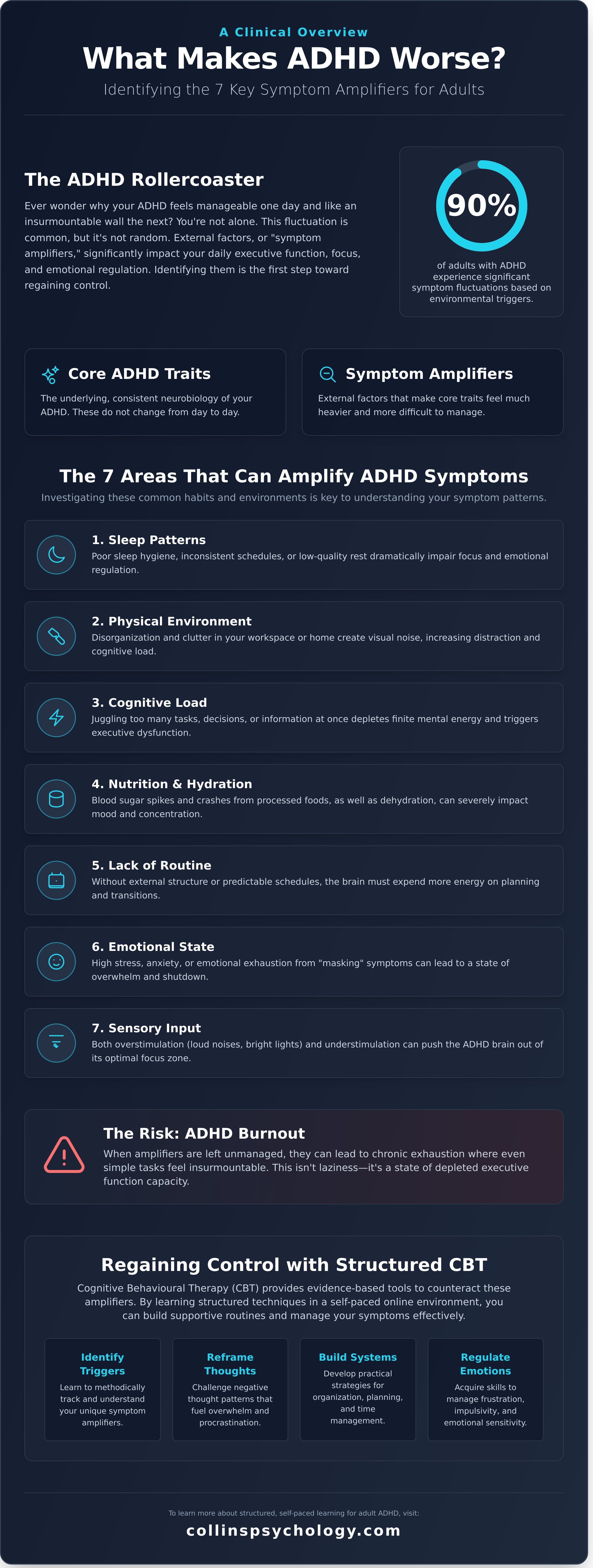
While every individual is different, clinical observation and research point to seven common factors that consistently exacerbate ADHD symptoms. Identifying which of these affect you most is a critical step toward regaining control.
Chronic Sleep Deprivation
Negatively impacts the prefrontal cortex, the area of the brain responsible for executive functions.
A Lack of Environmental Structure or Routine
An unpredictable environment forces the ADHD brain to make constant decisions, leading to mental fatigue.
High Levels of Unmanaged Psychological Stress
Stress floods the brain with cortisol, which can disrupt dopamine regulation and impair focus (Arnsten, 2009).
Poor Nutritional Timing and Skipping Meals
Unstable blood sugar levels can lead to irritability, brain fog, and poor concentration.
Excessive Digital Stimulation and Screen Time
Constant notifications and rapid content shifts create a dopamine feedback loop that makes sustained focus on less stimulating tasks much harder (Wilmer et al., 2017).
Chronic Multitasking
The constant task-switching required for multitasking is mentally draining and significantly reduces the quality and efficiency of your work.
Low Levels of Physical Activity
A sedentary lifestyle deprives the brain of the neurochemical benefits of exercise, such as increased dopamine and norepinephrine.
The Critical Impact of Sleep and Routine
Poor sleep hygiene can both mimic and magnify ADHD symptoms. A sleep-deprived brain struggles with focus, emotional regulation, and memory, compounding the existing challenges of ADHD (Wajszilber et al., 2018). Creating a predictable daily "skeleton" or routine reduces cognitive load because it automates recurring decisions. For those who struggle with sleep-onset insomnia, a common issue in ADHD, CBT techniques can be highly effective at calming a racing mind and establishing a healthy sleep pattern.
Digital Distractions and Cognitive Overload
Modern life is filled with digital distractions that are particularly challenging for the ADHD brain. Social media, news alerts, and endless emails create a powerful dopamine loop that trains your brain to seek constant novelty. This makes it incredibly difficult to engage in deep, focused work. Furthermore, the belief that you can effectively multitask is a myth that drains your limited executive resources. Setting firm boundaries with technology is not about restriction; it is about preserving your mental energy for what truly matters.
The Relationship Between Cognitive Load and Executive Function
Think of your executive function as the Chief Executive Officer of your brain. It is responsible for planning, organising, initiating tasks, and regulating emotions. The seven "amplifiers" listed above act like an overwhelming number of urgent reports landing on the CEO's desk at once. They deplete the cognitive "fuel tank," making it harder to perform even basic tasks. For adults with ADHD, who already have a baseline deficit in this area, this overwhelm happens much more quickly. The biological link is clear: high levels of the stress hormone cortisol interfere with the dopamine pathways that are essential for motivation and focus (Arnsten, 2009).
Understanding the Executive Function Deficit
Executive function is a set of mental skills that include working memory, flexible thinking, and self-control (Diamond, 2013). When these functions are impaired, it can feel like your internal world is as cluttered as your external one. An untidy desk or a chaotic schedule is often a direct reflection of internal cognitive clutter. It becomes difficult to hold information in your mind (working memory), shift your attention appropriately, or manage your emotional responses (inhibition).
The Cycle of Emotional Dysregulation
When executive functions are overloaded, emotional dysregulation often follows. The frustration of not being able to start a task or remember an appointment can lead to feelings of shame, anger, and low self-esteem. This creates a negative feedback loop: worsening symptoms cause emotional distress, and that emotional distress further drains your cognitive resources, making your symptoms even worse. Learning to manage this cycle is a key part of living well with ADHD. For those struggling, it can be helpful to explore CBT techniques for ADHD emotional regulation.
Implementing CBT Strategies to Mitigate ADHD Triggers
Cognitive Behavioural Therapy (CBT) offers a structured, practical, and evidence-based toolkit for managing ADHD amplifiers. It works by helping you change unhelpful thought patterns and behaviours. Instead of simply trying harder, CBT teaches you to work smarter by implementing specific strategies tailored to the ADHD brain (Safren et al., 2017).
Cognitive Restructuring
Learning to identify and challenge negative self-talk, such as the "I am lazy" or "I am a failure" narrative, and replacing it with more balanced and compassionate thoughts.
Behavioural Activation
Taking small, manageable steps to rebuild routines and re-engage with positive activities, which helps combat procrastination and build momentum.
Time Management Tools
Using external systems like planners, calendars, and timers to act as an "external brain," reducing the burden on your working memory.
Goal Setting
Breaking down large, overwhelming projects into small, concrete micro-steps that are easier to initiate and complete.
Practical Tools for Time Management and Focus
One of the core principles of CBT for ADHD is "externalisation," or getting things out of your head and into a physical or digital system you can trust. This supports your working memory. Techniques like the Pomodoro method, which involves working in focused 25-minute intervals, can help manage the tendency to task-switch and improve sustained attention. These are just a few of the many tools available to help you improve your daily life. To learn more, you can investigate our programme on CBT for ADHD executive function.
Building a Sustainable Fitness and Sleep Plan
Regular physical activity provides immediate neurochemical benefits for the ADHD brain, boosting dopamine and improving focus (Mehren et al., 2020). You do not need an intense regimen; even a brisk 20-minute walk can make a significant difference. Similarly, creating a "sleep sanctuary" by optimising your bedroom for rest and establishing a consistent wind-down routine can dramatically improve sleep quality. The more you can turn these positive behaviours into consistent habits, the less you will need to rely on willpower and decision-making, freeing up valuable mental energy.
Structured Learning Through Self-Paced CBT Programmes
Recognising your triggers is the first step, but building lasting change requires a structured approach. This is where self-paced learning can be incredibly beneficial. For many adults with ADHD, the pressure of scheduled appointments and the fear of being judged can be significant barriers to seeking help. Online programmes offer a flexible and private way to learn essential skills. At Collins Psychology, we have designed our online modules to fit into a busy adult life, allowing you to learn and apply CBT strategies at a pace that feels right for you.
Why Self-Paced Learning Works for the ADHD Brain
The ADHD brain thrives on interest and autonomy. Self-paced learning removes the "shame" barrier often felt in clinical settings when a task is not completed on time. It gives you the freedom to revisit complex topics, like goal setting or emotional regulation, as many times as you need until the concepts are clear. This method respects the unique learning style of the ADHD brain, making the process of change more effective and sustainable. If you find setting goals particularly challenging, our specific module on CBT for ADHD goal setting can provide targeted support.
Taking Action Today
You can begin your journey to better ADHD management today by taking a moment to reflect on the seven amplifiers discussed in this article. Which one or two are having the biggest impact on your life right now? Remember, the goal is consistency, not perfection. Making small, incremental changes to your daily habits can lead to significant improvements in your focus, mood, and overall well being.
If you are ready to take a structured, evidence-based approach to managing your ADHD, we invite you to explore our full range of CBT programmes for ADHD.
Frequently Asked Questions
Can adult ADHD get worse with age?
ADHD itself does not neurologically worsen with age, but symptoms can feel more severe. This is often because adult responsibilities (career, family, finances) place greater demands on executive functions, and the external support structures of childhood are no longer present.
How does stress specifically affect someone with ADHD?
Stress releases the hormone cortisol, which can interfere with the brain's prefrontal cortex. For someone with ADHD, this disruption is particularly problematic as it impairs already-challenged executive functions and can disrupt the regulation of dopamine, a key neurotransmitter for focus and motivation (Arnsten, 2009).
Why does screen time make my ADHD symptoms feel more intense?
Excessive screen time, especially from social media and short-form video, trains the brain to expect constant, rapid rewards. This creates a dopamine feedback loop that makes it much harder to sustain attention on slower, less stimulating but more important tasks, thereby intensifying feelings of restlessness and inattention (Wilmer et al., 2017).
Is it possible to manage ADHD without one-to-one therapy sessions?
Yes. For many adults, structured, self-paced learning programmes based on Cognitive Behavioural Therapy (CBT) are a highly effective way to manage ADHD. These programmes provide the education, tools, and strategies needed to build skills independently and flexibly, which can be a better fit for the ADHD brain than traditional therapy appointments.
What is the fastest way to improve executive function naturally?
While there is no "quick fix," one of the most effective strategies is regular physical exercise. Aerobic activity has been shown to have an immediate positive effect on the brain's neurochemistry, boosting levels of dopamine and norepinephrine, which are crucial for focus, attention, and impulse control (Mehren et al., 2020).
How do I know if my lifestyle is making my ADHD worse?
Keep a simple journal for a week. Note your sleep duration, what you eat, your level of physical activity, and your screen time. At the end of each day, rate your focus, mood, and overall symptom severity. You will likely begin to see clear patterns between the seven "amplifiers" and the days you struggle the most.
What role does diet play in adult ADHD symptom severity?
While diet is not a cure, it plays a significant supportive role. Skipping meals and consuming high-sugar foods can cause blood sugar spikes and crashes, leading to brain fog, irritability, and poor focus. A balanced diet with adequate protein, complex carbohydrates, and healthy fats helps stabilise energy levels and supports optimal brain function.
Can lack of exercise cause an ADHD flare-up?
Yes, a sedentary lifestyle can contribute to a "flare-up" or worsening of ADHD symptoms. Exercise is a powerful tool for managing ADHD as it naturally boosts key neurotransmitters that help with focus and mood regulation. A sudden drop in physical activity can lead to a noticeable decline in your ability to manage symptoms.
References
Arnsten, A. F. (2009). Stress signalling pathways that impair prefrontal cortex structure and function. Nature Reviews Neuroscience, 10(6), 410–422. https://doi.org/10.1038/nrn2648
Diamond, A. (2013). Executive functions. Annual Review of Psychology, 64, 135–168. https://doi.org/10.1146/annurev-psych-113011-143750
Mehren, A., Reichert, M., Coghill, D., Müller, H. H., & Philipsen, A. (2020). Physical exercise in attention deficit hyperactivity disorder: evidence and implications for the treatment of adult ADHD. Borderline Personality Disorder and Emotion Dysregulation, 7(1), 1. https://doi.org/10.1186/s40479-020-0115-y
Safren, S. A., Sprich, S. E., Perlman, C. A., & Otto, M. W. (2017). Mastering your adult ADHD: A cognitive-behavioral treatment program, therapist guide (2nd ed.). Oxford University Press.
Wajszilber, D., Santiseban, J. A., & Gruber, R. (2018). Sleep disorders in patients with ADHD: a review of the literature. Journal of the Canadian Academy of Child and Adolescent Psychiatry, 27(4), 224–233.
Wilmer, H. H., Sherman, L. E., & Chein, J. M. (2017). Smartphones and cognition: a review of research exploring the links between mobile technology use and cognitive functioning. Frontiers in Psychology, 8, 605. https://doi.org/10.3389/fpsyg.2017.00605