.png)

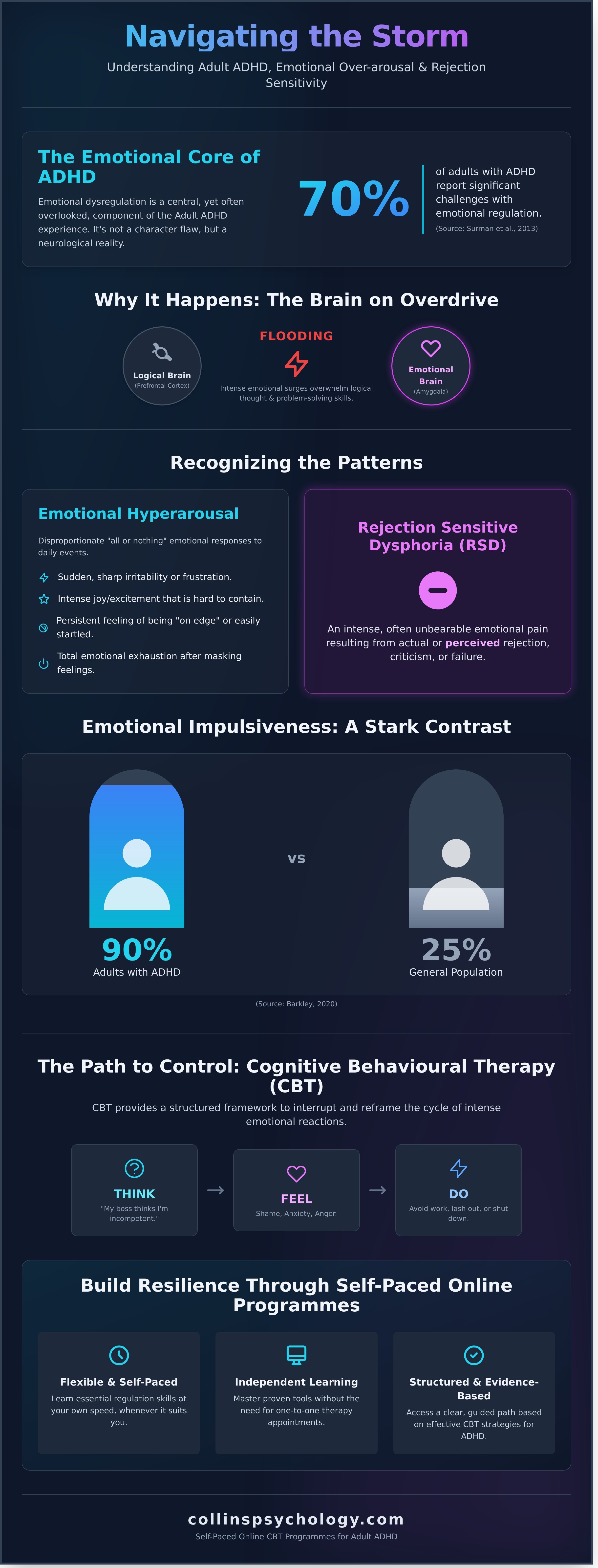
If you have Adult ADHD, you might feel like your emotions are a runaway train, veering from intense joy to crushing disappointment in moments. This emotional volatility, often called emotional over-arousal or hyperarousal, is a core but frequently overlooked aspect of the ADHD experience. This article explores the neurological reasons behind these intense feelings, distinguishes between general emotional hyperarousal and the acute pain of Rejection Sensitive Dysphoria (RSD), and provides structured, evidence-based Cognitive Behavioural Therapy (CBT) strategies to help you build resilience. You will learn practical tools to manage these emotional surges and discover how self-paced online programmes can provide a flexible and effective way to build systems that work with your brain, not against it.
Key Takeaways
Emotional Intensity is Neurological
Emotional over-arousal in ADHD is not a character flaw but a result of differences in brain structure and function, particularly involving the prefrontal cortex and amygdala.
RSD vs. Hyperarousal
Rejection Sensitive Dysphoria (RSD) is a specific, intense emotional pain triggered by perceived rejection or criticism, while emotional hyperarousal is a broader state of heightened emotional reactivity to various stimuli.
CBT is an Effective Tool
Cognitive Behavioural Therapy (CBT) provides a structured framework for managing intense emotions by changing the relationship between your thoughts, feelings, and behaviours.
Systems Beat Motivation
Lasting change comes from building reliable systems, not relying on fleeting motivation. Self-paced online learning allows you to develop these systems in a way that fits the ADHD brain.
Table of Contents
• The Hidden Side of Adult ADHD: Emotional Over-arousal and Sensitivity
• The Science of the ADHD Brain and Emotional Regulation
• Rejection Sensitivity vs. Emotional Hyperarousal: Key Differences
• Practical CBT Strategies for Managing Intense Emotions Daily
• Building Resilience Through Self-Paced Online CBT Programmes
The Hidden Side of Adult ADHD: Emotional Over-arousal and Sensitivity
Many adults with ADHD find that managing their emotions is one of their greatest challenges. Emotional over-arousal, or hyperarousal, refers to the experience of feeling emotions with a greater and more immediate intensity than is typical. While emotional dysregulation is not listed as a core diagnostic criterion in the DSM-5, it is widely recognised by clinicians as a significant component of the adult ADHD experience (Barkley, 2020). A specific and painful aspect of this is Rejection Sensitive Dysphoria (RSD), which is an extreme emotional sensitivity and pain triggered by the perception of being rejected or criticised by important people in your life.
Why ADHD is More Than Just Inattention
For decades, ADHD was primarily viewed as a childhood disorder of hyperactivity and inattention. We now understand it as a lifelong neurodevelopmental condition that impacts the brain's executive functions, which are the management systems that control self-regulation. In an Irish professional context, this can manifest as struggling to manage deadlines, but it also means struggling to manage emotional reactions to feedback or workplace stress. This can lead to a state of "flooding," where intense emotions completely overwhelm your capacity for logical thought and problem-solving, making it difficult to function effectively.
Recognising the Signs of Emotional Hyperarousal
The signs of emotional hyperarousal can be varied and often appear as an "all or nothing" response to life events. Common manifestations include sudden and intense flashes of irritability over minor issues, overwhelming feelings of joy from small successes, or deep despair in response to a small setback. These emotional surges can be exhausting and confusing, both for the individual and those around them. Recognising these signs is the first step toward implementing structured management strategies to create more emotional stability.
The Science of the ADHD Brain and Emotional Regulation
The emotional intensity experienced by adults with ADHD is rooted in the brain's wiring. The prefrontal cortex, which acts as the brain's command centre or "brakes," is responsible for executive functions like emotional regulation, impulse control, and planning. In the ADHD brain, this region often shows differences in development and activity. This makes it harder to pause and think before reacting to emotional triggers.
Simultaneously, the amygdala, the brain's emotional alarm system, can be overactive. It detects potential threats and triggers the fight-or-flight response. Research using neuroimaging shows that in individuals with ADHD, the communication pathway between the prefrontal cortex and the amygdala is less efficient, leading to a quick, strong emotional alarm without the necessary top-down control to calm it down (Nigg, 2017).
Executive Function and the Emotional Brake System
Executive function is the set of mental skills that includes working memory, flexible thinking, and self-control. In the context of emotions, these skills allow you to "down-regulate," or reduce the intensity of a feeling before it becomes overwhelming. Because of challenges with executive functioning, adults with ADHD find it much harder to apply these emotional brakes. If you want to learn more about strengthening these core skills, our programme on ADHD executive functioning provides a structured system.
Why the ADHD Brain Processes Criticism Differently
The ADHD brain's sensitivity to criticism is linked to its unique neurochemistry, particularly the regulation of the neurotransmitter dopamine. Dopamine is crucial for regulating emotional responses and maintaining a sense of reward and motivation. When the dopamine system is inconsistent, it can lower your emotional resilience, making you more vulnerable to the perceived threat of social rejection. This intense reaction is a biological response, not a sign of weakness or a lack of willpower.
Rejection Sensitivity vs. Emotional Hyperarousal: Key Differences
While both are related to emotional intensity, it is important to distinguish between Rejection Sensitive Dysphoria (RSD) and general emotional hyperarousal. RSD is a specific, targeted reaction to perceived social rejection, whereas hyperarousal can be triggered by a wide range of internal and external stimuli. Understanding the difference is crucial because while both are features of ADHD emotionality, they are distinct from mood disorders like Bipolar Disorder, which involve sustained periods of mood elevation or depression (Shaw et al., 2014).
FeatureRejection Sensitive Dysphoria (RSD)General Emotional HyperarousalPrimary TriggerPerceived or actual rejection, criticism, or failure.Sensory overload, stress, frustration, excitement, or fatigue.Emotional CoreIntense feelings of shame, humiliation, and worthlessness.A wide range of emotions (anger, joy, anxiety, sadness).DurationTypically a sudden, intense, and painful "flash-fire" that may pass quickly.Can be a more sustained state of emotional volatility.Physical SensationOften described as a sudden, physical "gut-punch" or wound.General feelings of being overwhelmed, tense, or "on edge."
Identifying Your Personal Emotional Triggers
To manage your emotional responses, you first need to understand what triggers them. For RSD, this involves identifying the people or situations that make you feel most vulnerable to criticism. You might notice that RSD episodes are like a flash-fire, consuming you in an instant and then disappearing just as quickly. A helpful first step is to begin tracking your emotional states throughout the day, noting what was happening right before a strong emotional surge. This practice helps you find patterns and anticipate situations that require more self-regulation.
The Impact on Relationships and Career
The emotional volatility of ADHD can place significant strain on both personal and professional relationships. In the workplace, over-reacting to constructive feedback can be misinterpreted as defensiveness, potentially hindering your career growth in Ireland and elsewhere. In personal relationships, the fear of rejection can lead to a painful cycle of people-pleasing followed by social withdrawal to avoid the possibility of getting hurt. Recognising that this is a neurological mechanism, not a personal failing, is the first step toward breaking this cycle and improving low self-esteem.
Understanding Your Emotional Response
When emotions rise quickly, it can be difficult to understand what is actually happening in the moment. Both Rejection Sensitive Dysphoria (RSD) and emotional hyperarousal are common in adults with ADHD, and while they can feel similar, the underlying drivers are different. Learning to pause and identify the pattern can reduce confusion, self-blame, and help you choose the most effective response.
Step 1: Identify the Trigger
Start by gently asking yourself: What set this off?
Was it social or relational?
- A comment, tone, or facial expression from someone
- Feeling excluded, ignored, or overlooked
- Perceiving criticism, even if it was subtle or unintended
- Not receiving a reply, validation, or expected response
→ This points towards RSD, where the nervous system is highly sensitive to perceived rejection, disapproval, or loss of connection. Even neutral situations can be interpreted as personal.
Was it situational or environmental?
- Sensory overload (noise, crowds, interruptions)
- Time pressure, deadlines, or competing demands
- Unexpected changes or things not going to plan
- Feeling mentally overloaded or unable to organise thoughts
→ This suggests Emotional Hyperarousal, where the nervous system becomes overwhelmed by cognitive load or environmental stress rather than interpersonal meaning.
Step 2: Name the Core Feeling
Next, tune into the quality of the emotion rather than just the intensity.
Does it feel like shame, rejection, or emotional pain?
- “I’ve done something wrong”
- “They don’t like me”
- “I’m not good enough”
- “I’ve embarrassed myself”
This often comes with:
- A deep, internalised sense of personal failure
- A strong urge to withdraw, hide, people-please, or overcorrect
- Replaying conversations or searching for what went wrong
→ This is characteristic of RSD, where the emotional response is tied to identity and perceived social threat.
Or does it feel like frustration, anger, or overwhelm?
- “This is too much”
- “I can’t deal with this right now”
- “Why is everything happening at once?”
- “I just need this to stop”
This often comes with:
- Irritability or short temper
- A sense of pressure building internally
- Difficulty thinking clearly or prioritising
- Urges to escape, shut down, or react impulsively
→ This aligns more with Emotional Hyperarousal, where the system is overloaded rather than socially threatened.
Step 3: Notice the Duration and Pattern
Finally, observe how the emotion unfolds over time.
Was it sudden, sharp, and intense?
- Felt immediate and overwhelming, like a “hit”
- Triggered a strong emotional reaction within seconds
- May ease once the perceived rejection is resolved or reframed
- Can leave behind lingering shame or rumination
→ This pattern is typical of RSD, which is often fast-acting and deeply felt.
Or is it more sustained and simmering?
- Builds gradually as demands increase
- Feels like being constantly “on edge”
- Persists until the stressor is reduced or removed
- Can escalate into burnout or shutdown if prolonged
→ This reflects Emotional Hyperarousal, where the nervous system remains activated over time.
Why This Matters
Understanding the difference is not about labelling yourself, it’s about responding more effectively.
- RSD often benefits from strategies that focus on cognitive reframing, self-compassion, and checking interpretations
- Emotional Hyperarousal often responds better to reducing stimulation, regulating the nervous system, and simplifying demands
Both are valid. Both are common. And both can be worked with once you can recognise the pattern.
No matter the label, the strategy is the same: Pause. Breathe. Challenge the thought. A structured CBT system can help you do this consistently.
Practical CBT Strategies for Managing Intense Emotions Daily
Cognitive Behavioural Therapy (CBT) is one of the most effective, evidence-based approaches for managing the challenges of adult ADHD, including emotional dysregulation. CBT operates on the principle of the "Think-Feel-Do" cycle, which shows how your thoughts about a situation directly influence your feelings and subsequent actions. By learning to identify and challenge the unhelpful thoughts that fuel an emotional surge, you can change how you feel and respond.
For immediate relief when you feel hyperaroused, try these grounding techniques:
5-4-3-2-1 Method
Name 5 things you can see, 4 things you can feel, 3 things you can hear, 2 things you can smell, and 1 thing you can taste.
Box Breathing
Inhale for 4 seconds, hold for 4 seconds, exhale for 4 seconds, and hold for 4 seconds. Repeat.
Temperature Change
Hold a cold object or splash cold water on your face to activate the mammalian dive reflex, which slows your heart rate.
For more structured practice, the emotional regulation module provides a systematic approach.
Cognitive Restructuring for Rejection Sensitivity
Cognitive restructuring is a core CBT technique for challenging the catastrophic thoughts that often accompany RSD. When you perceive a slight, use the "Evidence For and Against" technique to question your initial interpretation. Pause and ask yourself: "What is the evidence that my interpretation is true? What is the evidence against it? What is a more balanced or alternative explanation?"
For example, imagine a colleague sends you a very short, one-word email. Your RSD-fueled thought might be, "They are angry with me." By pausing, you can reframe this. Evidence for: The email was blunt. Evidence against: They are very busy, they often send short emails to everyone, and we had a pleasant conversation yesterday. A more balanced thought is, "They are probably just busy and replied quickly."
Lifestyle Foundations for Emotional Balance
Your ability to regulate emotions is deeply connected to your physical state. Prioritising consistent sleep and regular fitness helps to stabilise your nervous system, making you less susceptible to emotional over-arousal. Furthermore, poor time management often leads to chronic stress, which is a major trigger for emotional outbursts. By building better systems for managing your time and tasks, you reduce the daily overwhelm that depletes your self-regulatory resources. Our goal setting resource can help you create a structured approach to reduce daily stress.
Building Resilience Through Self-Paced Online CBT Programmes
Managing ADHD requires more than just knowing what to do; it requires building systems that help you actually do it, consistently. At Collins Psychology, we provide structured, CBT-based systems for adults with ADHD. It is important to clarify that we offer online, self-paced CBT programmes and do not provide one-to-one therapy. This model is designed to provide professional, evidence-based support that is flexible and accessible. You can build your ADHD support system over time and start where you struggle most.
Why Structured Online Learning Works for ADHD
Traditional therapy appointments can be difficult for the ADHD brain to manage due to the "executive function tax" of scheduling, remembering, and travelling to sessions. Our online programmes remove these barriers. The bite-sized modules are designed to prevent cognitive overwhelm, allowing you to learn at your own pace whenever and wherever works for you. This is not therapy or coaching; it is a system designed to help you stop relying on motivation and build habits that work with your brain. All our content is developed in line with the professional guidelines of the Psychological Society of Ireland (PSI) for ethical practice.
Taking the Next Step Toward Emotional Control
Understanding the neurological basis of your emotional intensity is empowering. It shifts the narrative from "What's wrong with me?" to "How can I work with my brain?" You can stop starting over every Monday and begin building a system that provides lasting support.
Explore our full collection of ADHD programmes to see all the available entry points. When you are ready to begin, our comprehensive CBT for Adult ADHD course is the perfect place to start your journey.
Your emotional intensity is a part of your brain’s wiring, but it does not have to drive your life.
Frequently Asked Questions
What is the difference between ADHD emotional dysregulation and Bipolar Disorder?
ADHD emotional dysregulation involves short, intense, situation-based mood shifts that happen multiple times a day. In contrast, Bipolar Disorder involves distinct episodes of depression and mania or hypomania that last for days, weeks, or even months and represent a significant change from a person's usual functioning.
Can CBT really help with something that feels so physical like rejection sensitivity?
Yes. While the feeling of RSD is intensely physical, it is triggered by a thought or an interpretation of an event. CBT helps you slow down that process, challenge the initial catastrophic thought, and choose a more balanced response, which in turn calms the physical reaction over time.
How long does it take to see results from a self-paced CBT programme?
The timeline varies for everyone. The key is consistency rather than intensity. Many users report feeling a greater sense of understanding and control within the first few weeks of consistently applying the strategies from the programme in their daily lives.
Is rejection sensitive dysphoria a formal medical diagnosis in Ireland?
No, Rejection Sensitive Dysphoria (RSD) is not a formal diagnosis in the DSM-5 or ICD-11, which are the manuals used for diagnosis in Ireland. However, it is a widely recognised clinical concept used to describe a common and significant challenge for many people with ADHD.
Do I need a formal ADHD diagnosis to start an online CBT programme?
No, you do not need a formal diagnosis to benefit from our programmes. The strategies and systems are designed to help with the challenges of executive function and emotional regulation, which can be helpful for anyone who experiences them, regardless of their diagnostic status.
How does sleep impact my ability to regulate my emotions with ADHD?
Sleep is critical for replenishing the brain's resources, particularly in the prefrontal cortex. A lack of quality sleep impairs executive functions, making you more impulsive and emotionally reactive. Prioritising sleep is a foundational step in any plan for better emotional regulation.
What should I do if I feel an emotional surge coming on at work?
If possible, step away from the situation for a few minutes. Go to the restroom or for a short walk. Practice a grounding technique like box breathing to calm your nervous system before deciding how to respond.
Are these programmes suitable for professionals who want to help their clients?
While our programmes are designed for adults with ADHD, many mental health professionals find the content and structure helpful for understanding practical, CBT-based applications for their own clients. For enquiries about using our materials in a professional context, please contact us.
References
Barkley, R. A. (2020). ADHD in adults: What the science says. Guilford Press.
Nigg, J. T. (2017). Getting ahead of ADHD: What next-generation science says about treatments that work and how you can make them work for your child. Guilford Press.
Shaw, P., Stringaris, A., Nigg, J., & Leibenluft, E. (2014). Emotional dysregulation and attention-deficit/hyperactivity disorder. American Journal of Psychiatry, 171(3), 276–293. https://doi.org/10.1176/appi.ajp.2013.13070966