.png)
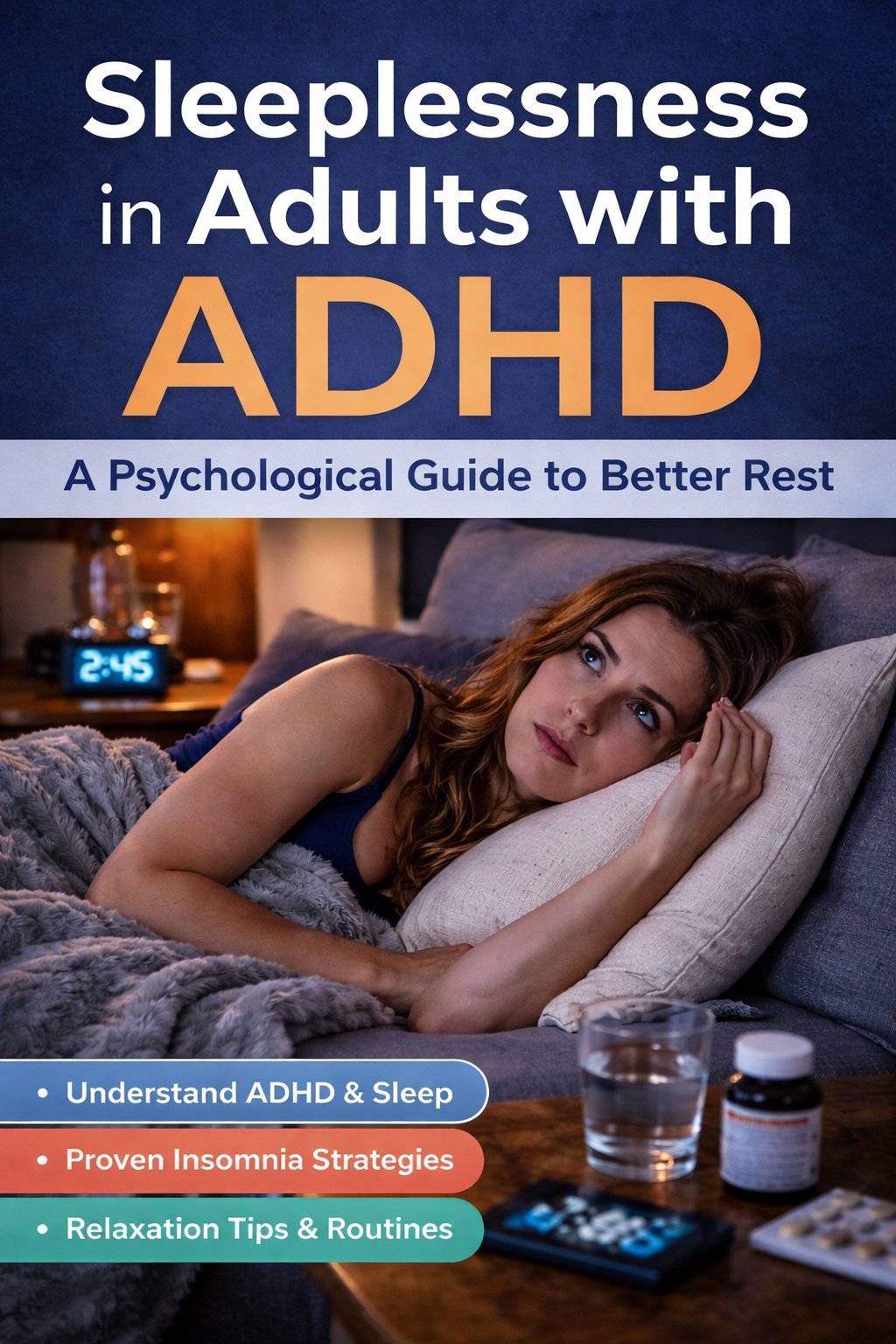
Struggling with a racing brain at night is a common and frustrating experience for many adults with ADHD in Ireland. Sleeplessness is more than just a bad habit; it is a challenge rooted in executive function and emotional regulation. This guide moves beyond generic advice to explore why the ADHD brain struggles with rest and provides a structured, evidence-based Cognitive Behavioural Therapy (CBT) approach to help you build systems that work with your brain, quiet your mind, and achieve better sleep.
Key Takeaways
• Sleeplessness in adults with ADHD is often linked to neurobiological traits, including difficulties with executive functions like task switching and impulse control.
• Standard sleep hygiene advice frequently fails because it does not address the ADHD brain's need for stimulation management and emotional regulation.
• Bedtime procrastination is a self-regulation issue, not a sign of laziness, and can be managed with structured CBT techniques.
• Cognitive Behavioural Therapy (CBT) provides practical, evidence-based tools to reframe unhelpful thoughts, manage evening anxiety, and build a sustainable wind-down routine.
• Self-paced online CBT programmes offer a flexible and effective way for adults with ADHD to learn these skills and build a support system that fits their lifestyle.
Table of Contents
• Why ADHD Brains Struggle to Switch Off at Night
• Moving Beyond Basic Sleep Hygiene for ADHD
• CBT Techniques to Combat Bedtime Procrastination
• Emotional Regulation and the Evening Wind Down
• Improving Sleep with Self Paced Online CBT Programmes
Why ADHD Brains Struggle to Switch Off at Night
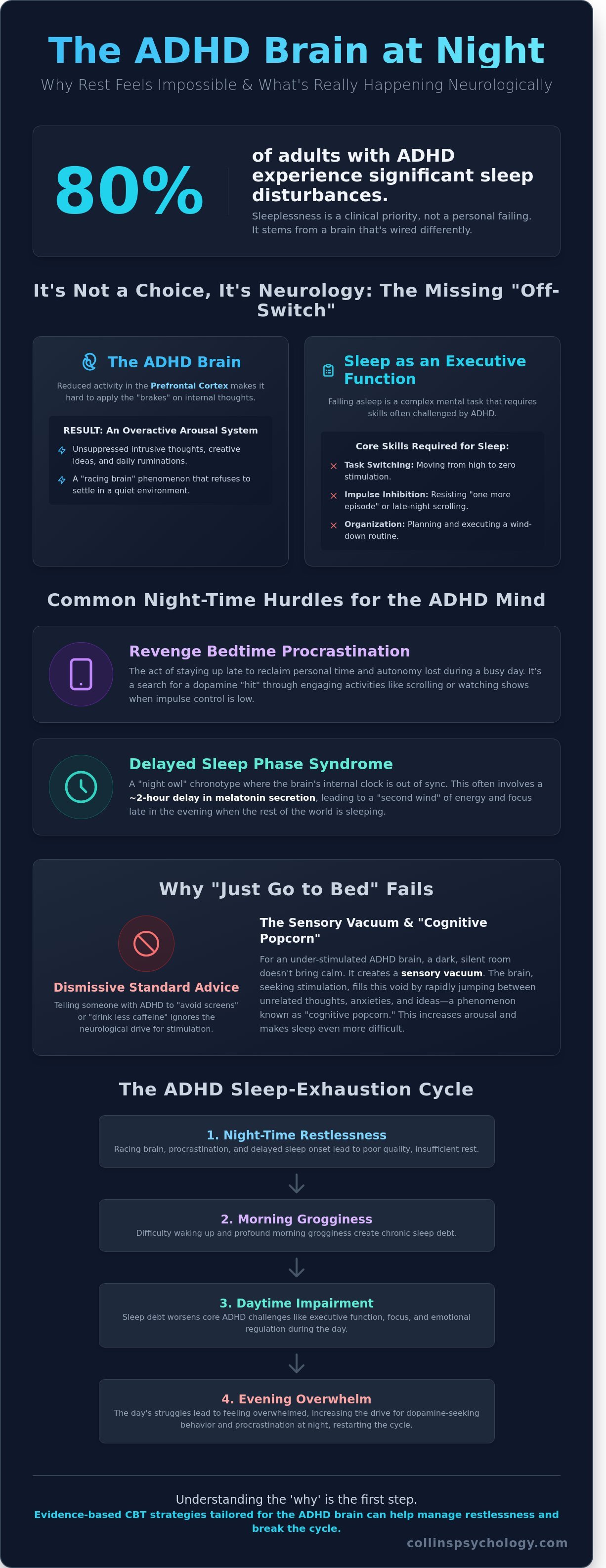
For many adults with ADHD, the moment their head hits the pillow is when their brain decides to come alive. This "racing brain" phenomenon is a hallmark of the neurobiological differences in ADHD, which directly impact the ability to regulate sleep. The prefrontal cortex, a region of the brain responsible for executive functions, plays a pivotal role in managing the sleep-wake cycle, and in ADHD, its activity patterns can make it difficult to transition from a state of alertness to one of rest (Wajszilber et al., 2018). In essence, preparing for sleep is an executive function task, requiring you to down-regulate, switch tasks, and inhibit impulses, all areas where the ADHD brain can struggle.
The Role of Executive Function in Sleep
Executive functions are the mental skills we use to get things done, and they are essential for creating a successful evening routine. Difficulty with task switching can make it feel impossible to stop an engaging activity, like watching a series or working on a project, even when you know you should be winding down. Furthermore, challenges with impulse control can lead to hours lost to late-night scrolling or "revenge bedtime procrastination," where you sacrifice sleep for the quiet leisure time you missed during the day. These are not moral failings; they are direct consequences of ADHD's impact on executive function. Learning to manage these skills is fundamental, which is why our CBT-based executive function system provides a structured approach to building these abilities.
Delayed Sleep Phase Syndrome and ADHD
Many adults with ADHD identify as "night owls," a pattern often linked to Delayed Sleep Phase Syndrome (DSPS). This is a circadian rhythm disorder where your internal body clock is shifted later than what is considered conventional (Kooij et al., 2019). Consequently, your brain does not produce melatonin, the sleep-inducing hormone, until much later at night, often leading to a "second wind" of energy precisely when you should be feeling tired. While this can make evenings feel productive or creative, it causes significant problems in the morning, leading to grogginess, difficulty waking, and impaired functioning throughout the day.
Moving Beyond Basic Sleep Hygiene for ADHD
If you are an adult with ADHD, you have likely been told to "just turn off your screens" or "try to relax," and you have probably found this advice unhelpful or even dismissive. Standard sleep hygiene fails to account for the unique wiring of the ADHD brain, which requires stimulation management rather than simple quiet time. An under-stimulated ADHD brain is a noisy one, and forcing it into a quiet, dark room without the right tools can amplify racing thoughts and anxiety. A more effective approach, aligned with Psychological Society of Ireland (PSI) guidelines, focuses on evidence-based behavioural strategies that work with your neurotype, not against it.
Why Traditional Advice Often Fails
The common "no screens before bed" rule can backfire for adults with ADHD. Abruptly removing a source of stimulation can leave the brain searching for something to focus on, leading to an increase in mental restlessness and rumination. The frustration of "trying harder" to sleep only creates more anxiety and pressure, a cycle that makes rest even more elusive. Structured CBT interventions, in contrast, provide the tools to calm the brain actively rather than just removing external stimuli, offering a more compassionate and effective path forward. Understanding the ADHD burnout cycle is often the first step to realising why old methods were never going to work.
A Psychological Perspective on Rest
To reduce the performance anxiety associated with sleep, it is helpful to shift your goal from "falling asleep" to "resting the brain." This change in perspective lowers the stakes and allows you to engage in calming activities without the pressure of an outcome. Adopting an attitude of self-compassion is crucial in this process, as it helps to counteract the guilt and self-criticism that often accompany sleep difficulties (Goode et al., 2021). Cognitive reframing techniques from CBT teach you how to challenge and change the unhelpful thoughts and beliefs you may have about sleep, reducing the sense of dread that can build as bedtime approaches.
CBT Techniques to Combat Bedtime Procrastination
Bedtime procrastination is not a sign of laziness; it is a common challenge in self-regulation for adults with ADHD. It often stems from a desire to claim personal time after a demanding day or an inability to successfully switch tasks away from a stimulating activity (Sirois & Pychyl, 2013). Cognitive Behavioural Therapy (CBT) is a highly effective framework for managing ADHD-related challenges because it provides concrete tools to break down overwhelming tasks and change unhelpful patterns. By breaking down your evening into small, manageable micro-goals and tracking your patterns, you can identify triggers and build a system that supports your intention to rest.
The Power of Goal Setting
Setting realistic evening intentions is a powerful way to reduce the overwhelm that leads to procrastination. Instead of a vague goal like "go to bed earlier," create a specific, three-step process.
Set a "Wind-Down Alarm"
An hour before you want to be in bed, set an alarm that signals the start of your routine.
Define Your First Step
Decide on a single, easy action to take when the alarm goes off, such as putting your phone on to charge across the room.
Use "If-Then" Planning
Prepare for likely distractions. For example, "If I feel the urge to watch another episode, then I will stand up and make a cup of herbal tea instead."
For more practical exercises on building these skills, explore our structured goal-setting system for adults with ADHD.
Cognitive Reframing for Late-Night Thoughts
The thoughts we have about sleep can become a major obstacle to actually getting it. CBT teaches you to identify and challenge these "sleep-interfering thoughts." For instance, the thought "I must sleep now or tomorrow will be a disaster" creates immense pressure. You can reframe this to something more compassionate and realistic, such as, "I am giving my body and mind a chance to rest. Even if I do not fall asleep immediately, resting in bed is still beneficial." Mindfulness techniques can also help you observe these thoughts as they arise without getting caught up in them, allowing them to pass like clouds in the sky.
Emotional Regulation and the Evening Wind Down
For adults with ADHD, the stresses of the day do not always fade by evening. Difficulties with emotional regulation mean that frustration, anxiety, or excitement can accumulate, preventing the mental relaxation necessary for sleep. This "emotional hangover" from the day's events keeps the brain in an alert, problem-solving mode. A structured evening wind-down routine should therefore include techniques to clear this mental clutter, such as a "brain dump," where you write down everything on your mind, from worries to tomorrow's to-do list. This act of externalising thoughts can create the mental space needed to rest.
Managing the ADHD "Emotional Hangover"
If you find yourself replaying conversations or processing the day's events at night, your brain is still working to make sense of everything. You can manage this by building a structured "closing the day" technique into your evening. This could involve spending ten minutes journaling about any unresolved issues or successes from the day, effectively putting a full stop on them before you begin your wind-down. This practice helps contain the emotional processing to a specific time, rather than letting it spill over into the hours you have set aside for rest. Our self-paced emotional regulation programme offers deeper support and tools for managing these challenges.
Designing a Low-Dopamine Evening
The ADHD brain is often seeking stimulation, which is why high-dopamine activities like video games, social media, or intense television shows are so engaging. However, these activities keep your brain in a state of high alert, making the transition to sleep difficult. The key is to design an evening that intentionally shifts to low-dopamine tasks. These are activities that are calming and engaging without being overly stimulating, such as reading a physical book, doing a jigsaw puzzle, listening to calm music, or light stretching. Creating strong environmental cues, like dimming the lights and putting on comfortable clothes, also helps signal to your brain that it is time to prepare for sleep. This is a core component of designing the best lifestyle for an ADHD brain.
Improving Sleep with Self Paced Online CBT Programmes
For many adults with ADHD, the idea of committing to weekly, face-to-face therapy sessions can feel overwhelming. A self-paced, online learning model offers the flexibility needed to build skills without adding more stress to your schedule. Collins Psychology provides structured, CBT-based systems for adults with ADHD who are tired of knowing what to do but still struggling to do it. It is not therapy. It is not coaching. It is a system designed to help you stop relying on motivation and instead build systems that work with your brain, so you can know what to do AND actually do it.
The Advantage of Online Learning
A structured, resource-heavy online approach is highly effective for the ADHD learning style. You can engage with the material when your brain is most receptive and revisit key modules whenever you need a refresher, which is particularly helpful when a relapse in old habits occurs. This model is also a cost-effective and accessible way to learn evidence-based psychological strategies from home. You can build your ADHD support system over time, starting where you struggle most. One system, with multiple entry points.
Getting Started with Collins Psychology
Our programmes provide a comprehensive library of resources, practical exercises, and tools designed to help you manage the core challenges of adult ADHD, including sleeplessness. You will learn the psychological mechanisms behind your struggles and gain a system to implement lasting change. We invite you to explore our full collection of CBT for ADHD programmes to find the system that best fits your needs.
Ready to stop starting over every Monday and build a better evening routine? Enrol in the CBT for Adult ADHD programme today and take the first step toward more restful nights.
Frequently Asked Questions
Is sleeplessness a common symptom of adult ADHD?
Yes, sleep problems are very common in adults with ADHD. Research indicates that a significant majority experience issues like difficulty falling asleep, restless sleep, and trouble waking up, often linked to circadian rhythm delays and challenges with self-regulation.
How does Cognitive Behavioural Therapy (CBT) help with ADHD sleep issues?
CBT provides a structured approach to identify and change the unhelpful thoughts, feelings, and behaviours that interfere with sleep. It offers practical tools for managing a racing mind, reducing sleep-related anxiety, and building a consistent, ADHD-friendly evening routine.
What is revenge bedtime procrastination and how do I stop it?
Revenge bedtime procrastination is the act of sacrificing sleep for leisure time because you feel you did not get enough of it during the day. You can stop it by using CBT strategies like "if-then" planning to manage impulses and by scheduling short, intentional breaks for yourself during the day to reduce the evening deficit.
Can I improve my sleep without taking medication for ADHD?
Yes. Behavioural and psychological strategies are powerful tools for improving sleep. A structured CBT system can help you address the root causes of your sleep difficulties, such as poor executive function, emotional dysregulation, and unhelpful thought patterns, providing a sustainable path to better rest.
How long does it take to see results from a CBT sleep programme?
While results vary, many people begin to notice improvements within a few weeks of consistently applying CBT principles. The key is consistent practice to build new habits and change long-standing patterns of thinking and behaviour.
Why does my brain feel more active at night than during the day?
This is often due to a combination of a delayed circadian rhythm (the "night owl" tendency) and reduced external stimulation at night. When the day's distractions fade, the ADHD brain can become more focused on its own internal thoughts, making it feel more active.
Are the Collins Psychology programmes suitable for people without a formal diagnosis?
Yes. Our programmes are designed to help any adult who struggles with ADHD-like symptoms such as inattention, disorganisation, emotional dysregulation, and sleeplessness. The systems and tools are beneficial for anyone looking to improve their executive function and self-regulation skills.
What is the difference between sleep hygiene and CBT for insomnia?
Sleep hygiene is a list of general tips for better sleep (e.g., avoid caffeine, have a dark room). CBT for insomnia (CBT-I) is a structured, multi-component psychological programme that addresses the underlying cognitive and behavioural factors that maintain sleeplessness, making it a far more comprehensive and effective approach for chronic sleep issues.
References
Goode, E., Thompson, S. L., & O'Connor, R. C. (2021). The relationship between self-compassion and sleep: A systematic review and meta-analysis. Sleep Medicine Reviews, 59, 101460. https://doi.org/10.1016/j.smrv.2021.101460
Kooij, J. J. S., Bijlenga, D., Salerno, L., Jaeschke, R., Bitter, I., Balázs, J., ... & Stes, S. (2019). Updated European Consensus Statement on diagnosis and treatment of adult ADHD. European Psychiatry, 56, 14-34. https://doi.org/10.1016/j.eurpsy.2018.11.001
Sirois, F. M., & Pychyl, T. A. (2013). Procrastination and the priority of short-term mood regulation: Consequences for future self. Social and Personality Psychology Compass, 7(2), 115-127. https://doi.org/10.1111/spc3.12011
Wajszilber, D., Santiseban, J. A., & Gruber, R. (2018). Sleep disorders in patients with ADHD: a review of the literature. Journal of the Canadian Academy of Child and Adolescent Psychiatry, 27(3), 186–195.