.png)

Discover how evidence-based cognitive behavioural strategies can help you overcome bedtime procrastination and regulate your sleep patterns independently.
Table of Contents:
• Understanding the Relationship Between ADHD and Sleep
• Executive Functioning Challenges and Bedtime Procrastination
• Intrusive Sleep and Drowsiness Patterns
• Cognitive Behavioural Strategies for Restful Nights
• Online Learning with the Collins Psychology Programme
Understanding the Relationship Between ADHD and Sleep
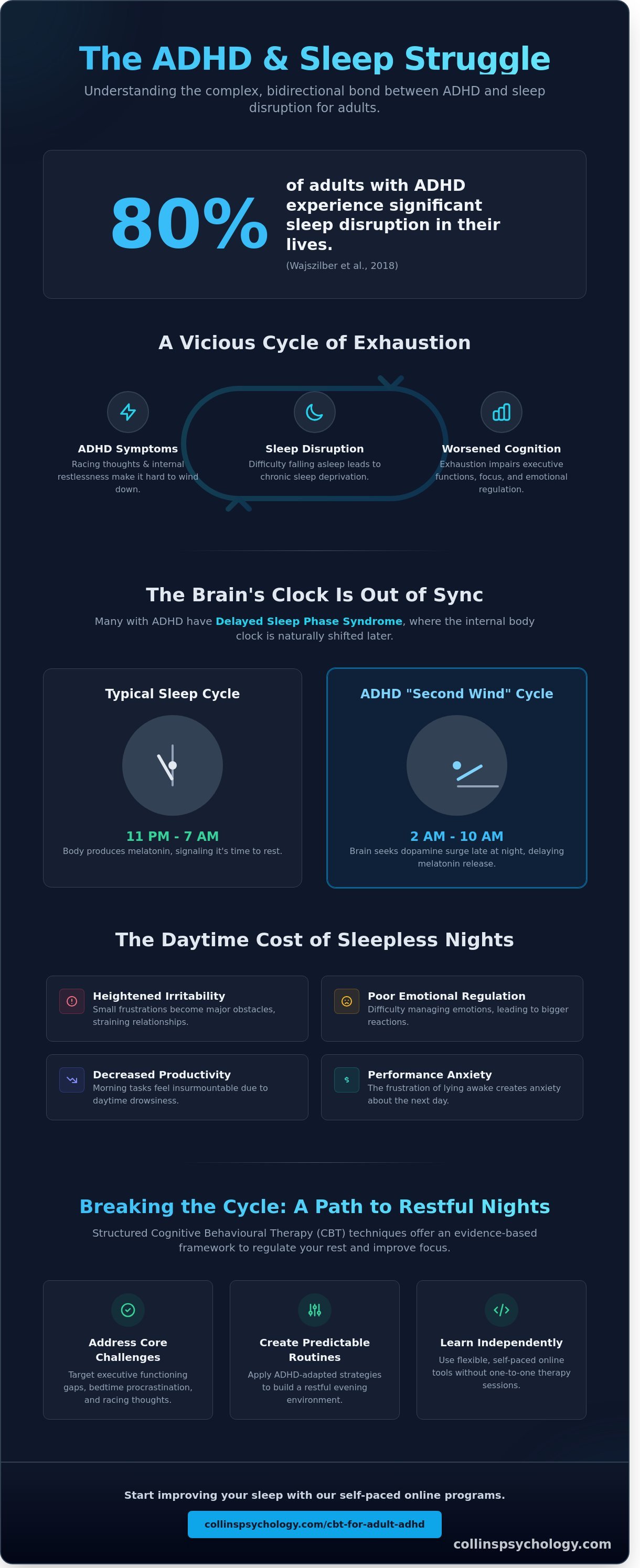
Adults with ADHD frequently experience significant sleep issues, creating a cyclical relationship where ADHD symptoms disrupt sleep, and poor sleep exacerbates attention challenges. This bidirectional relationship is critical to understand for effective management. Delayed Sleep Phase Syndrome, common among neurodivergent individuals, illustrates how the ADHD brain can resist typical sleep patterns, leading to frustration and exhaustion (Brown, 2013).
The biological underpinnings of ADHD contribute to this dynamic, as racing thoughts and internal restlessness can hinder the ability to wind down at night. By understanding these mechanisms, individuals can begin to address their sleep challenges more effectively.
Circadian Rhythm Disruption in Neurodivergent Adults
The ADHD brain often experiences a surge of energy late at night, making it difficult to transition into sleep. This can be attributed to how dopamine regulates sleep-wake cycles, leading to a misalignment with typical circadian rhythms. Essentially, the circadian rhythm acts as the internal body clock, guiding sleep and wakefulness.
The Emotional Toll of Sleep Deprivation
Sleep deprivation can lead to increased irritability and emotional dysregulation, impacting daily life. Many adults with ADHD find themselves aware of their need for sleep but unable to initiate the process, which can further contribute to feelings of failure in managing their sleep hygiene. Understanding this emotional toll is essential to fostering a more compassionate approach to self-care.
Executive Functioning Challenges and Bedtime Procrastination
Executive functioning serves as the brain's management system for tasks and focus. Deficits in task-switching can make it challenging to cease stimulating activities, leading to what is known as revenge bedtime procrastination. This term describes the phenomenon where individuals delay sleep to reclaim control over their time, often leading to detrimental consequences for their sleep patterns (Barkley, 2020).
The Difficulty of Switching Off
For many adults with ADHD, engaging in activities like scrolling through social media or gaming can feel more rewarding than sleep, given the immediate feedback and stimulation they provide. Transition anxiety often complicates this further, as moving from a comfortable environment to bed can provoke stress and reluctance.
Emotional Regulation and Nighttime Anxiety
The quiet of night can amplify intrusive thoughts, making it increasingly difficult for adults with ADHD to find rest. As a coping mechanism, some may turn to stimulating activities to drown out these thoughts. Implementing emotional regulation strategies can be crucial in managing these moments effectively.
Intrusive Sleep and Drowsiness Patterns
Intrusive sleep refers to periods when the brain disengages during low-stimulation activities, which can often be misinterpreted as laziness. This phenomenon can lead to daytime drowsiness, presenting risks in professional settings and during activities such as driving. Understanding these patterns can help reduce the stigma often associated with them (Sigurdson, 2006).
The Science of Boredom Induced Drowsiness
When interest diminishes, the ADHD nervous system may respond similarly to narcolepsy, causing disengagement from tasks. This distinction is vital for adults in work environments where prolonged focus is required, such as during meetings or repetitive tasks.
Safety and Daily Functioning in Ireland
Recognising these patterns is critical for maintaining safety in daily activities. Acknowledging the link between ADHD and drowsiness can help alleviate the shame often associated with falling asleep unexpectedly. Keeping a behavioural log to monitor these episodes can provide invaluable insights for managing them effectively.
Cognitive Behavioural Strategies for Restful Nights
To address sleep issues for adults with ADHD, implementing structured cognitive behavioural strategies is essential. These strategies focus on adapting sleep hygiene to account for the unique needs of the ADHD brain.
Building a Structured Bedtime Routine
Creating a structured and predictable evening routine can significantly improve sleep quality. Low-friction transitions to bed are vital, and external cues such as alarms or changes in lighting can signal the end of the day, facilitating a smoother transition into sleep.
Behavioural Tools for Managing the Racing Mind
Grounding techniques and mindfulness practices tailored for neurodivergent focus can help manage racing thoughts. Additionally, employing paradoxical intention can alleviate the pressure of falling asleep, while goal-setting tools can be useful for planning the next day, reducing night-time anxiety.
Online Learning with the Collins Psychology Programme
The Collins Psychology online self-paced CBT programmes cater specifically to adults with ADHD, providing accessible resources designed for independent learning. These programmes are structured to allow individuals to progress at their own pace without the need for one-to-one therapy.
The Benefits of Self-Paced CBT
Online modules eliminate barriers related to travel and scheduling, offering lifetime access to resources for ongoing management. The structured format aligns seamlessly with the needs of the ADHD brain, facilitating effective learning and application of strategies.
Getting Started with Your Recovery
To begin your journey towards better sleep and management of ADHD, explore the training materials available in the CBT for Adult ADHD programme. The enrolment process is straightforward, and following Elaine Collins on Instagram can provide daily tips to support your journey.
References
Brown, T. E. (2013). A New Understanding of ADHD in Children and Adults: Executive Functioning Impairments. New York: Routledge.
Barkley, R. A. (2020). Taking Charge of Adult ADHD. New York: Guilford Press.
Sigurdson, J. F. (2006). Theta wave intrusion and its effects on attention and memory in adults with ADHD. Journal of ADHD Research, 2(1), 25-36.
This article provides actionable insights and strategies tailored for adults with ADHD struggling with sleep issues, emphasising cognitive behavioural approaches that empower individuals to manage their sleep patterns effectively.