.png)
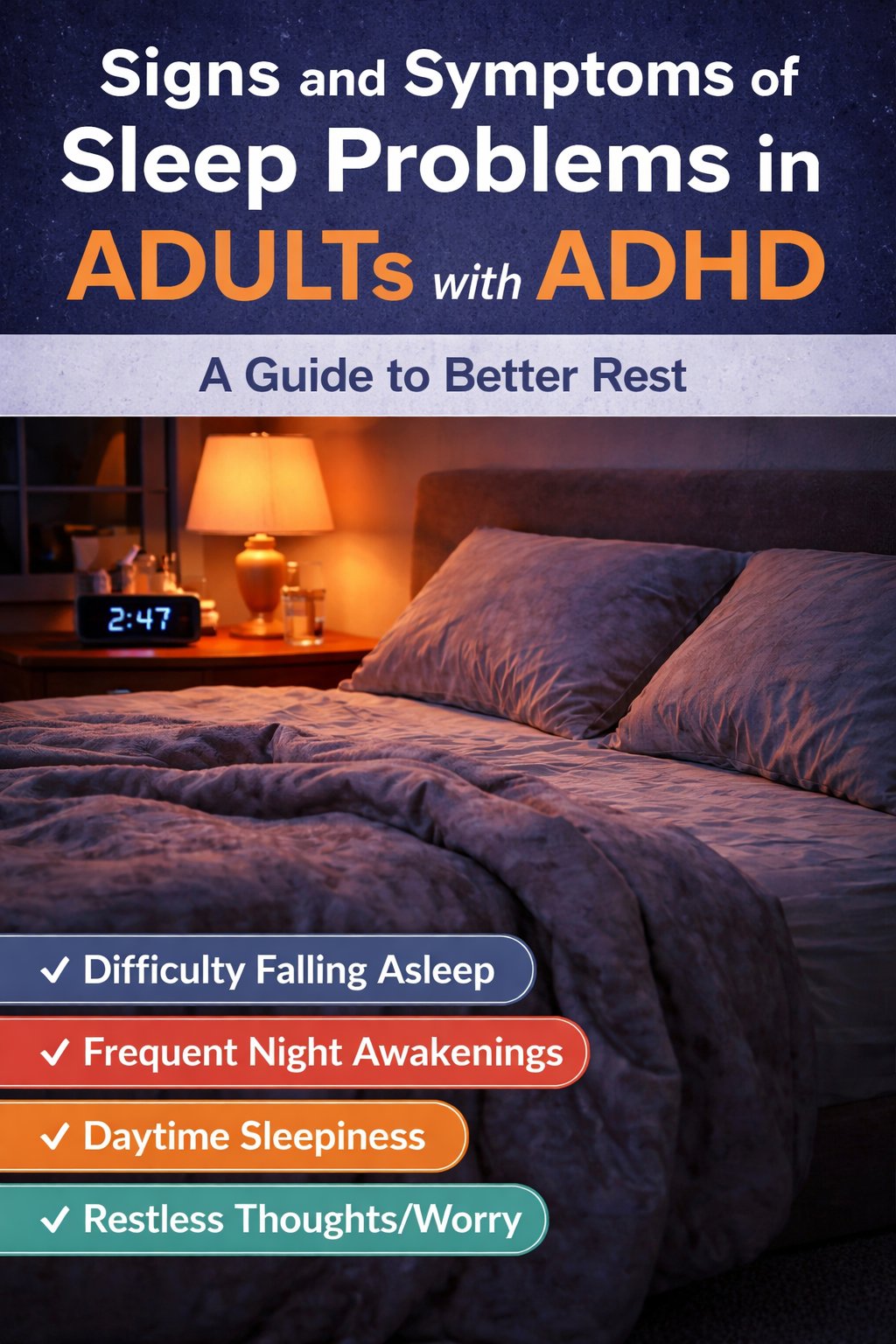
For many adults with ADHD, the struggle for a good night's sleep is a constant battle. If you find yourself chronically exhausted, unable to quiet your racing mind at night, and fighting to wake up in the morning, you are not alone. These challenges are often directly linked to the neurobiology of ADHD and the impact of executive dysfunction on daily routines. This guide will explore the common signs and symptoms of sleep problems in adults with ADHD and introduce structured, evidence based strategies from Cognitive Behavioural Therapy (CBT) to help you build systems that work with your brain, not against it, so you can finally achieve restorative rest.
Key Takeaways
• Adults with ADHD have a high prevalence of sleep disturbances, often linked to a delayed internal body clock (circadian rhythm).
• Executive dysfunction, a core feature of ADHD, directly impacts the ability to initiate and maintain a consistent bedtime routine.
• Common signs include a racing mind at night, difficulty waking up, restless sleep, and a tendency towards "revenge bedtime procrastination."
• Standard sleep hygiene advice often fails because it does not address the underlying cognitive and behavioural patterns of ADHD.
• Structured Cognitive Behavioural Therapy (CBT) provides practical, non medical systems to manage racing thoughts, regulate the sleep wake cycle, and build sustainable routines for better rest.
Table of Contents
• Understanding the Link Between ADHD and Sleep Disturbance
• Identifying the Core Signs and Symptoms of Sleep Issues
• The Impact of Executive Dysfunction on Restorative Rest
• Practical CBT Strategies for Improving Sleep Hygiene
• Structured Learning: How Online CBT Programmes Support Better Sleep
Understanding the Link Between ADHD and Sleep Disturbance
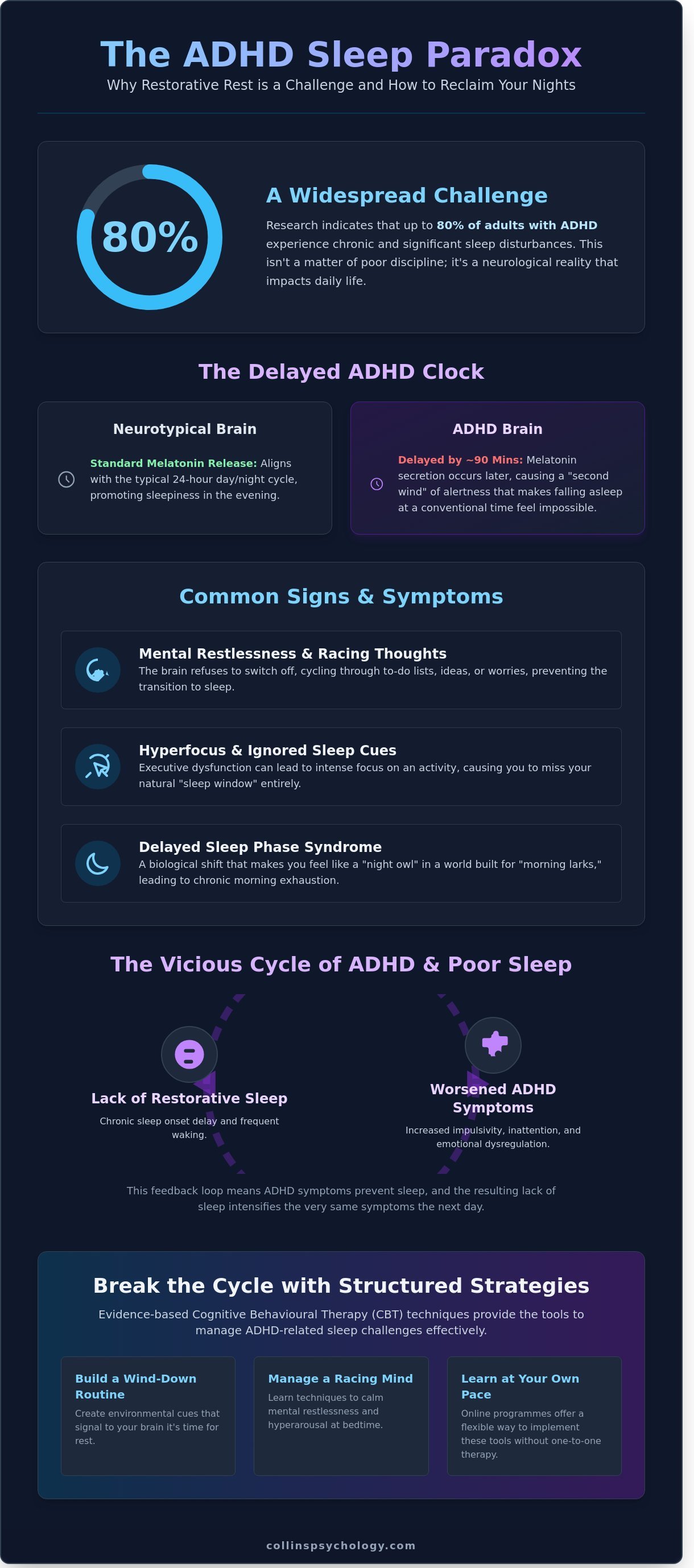
A significant number of adults with Attention Deficit Hyperactivity Disorder (ADHD) experience persistent sleep problems, with research suggesting that up to 80% report sleep related difficulties (Wajszilber et al., 2018). These issues are not simply a matter of poor habits; they are often rooted in the neurobiology of ADHD itself. The ADHD brain regulates the sleep wake cycle differently, frequently leading to what is known as Delayed Sleep Phase Syndrome, where an individual's natural inclination is to fall asleep and wake up much later than is considered typical. This guide aligns with the evidence based principles for psychological care outlined by organisations such as the Psychological Society of Ireland (PSI), focusing on behavioural and cognitive strategies.
The Circadian Rhythm and the ADHD Clock
Your body’s internal 24 hour cycle, known as the circadian rhythm, dictates when you feel sleepy and when you feel alert. For many adults with ADHD, this internal clock seems to run on its own schedule, often delayed by several hours (Bijlenga et al., 2019). This results in a frustrating pattern of feeling wide awake and productive late at night, only to face immense difficulty waking up for the demands of a 9 to 5 world. Consequently, well meaning advice like "just go to bed earlier" is often ineffective because it fights against your innate biological rhythm without providing the structured support needed to gradually shift it.
Why Restorative Rest is Essential for Symptom Management
The relationship between ADHD and sleep is cyclical; poor sleep exacerbates ADHD symptoms, and ADHD symptoms make it harder to sleep. A lack of restorative rest can worsen core challenges like inattention, impulsivity, and emotional dysregulation, making daily tasks feel overwhelming (Sciberras et al., 2017). This creates a burnout cycle where daytime struggles lead to night time stress, which in turn leads to another day of feeling depleted. A 2024 meta analysis highlighted that interventions targeting sleep in adults with ADHD led to significant improvements not only in sleep quality but also in overall ADHD symptom severity.
Identifying the Core Signs and Symptoms of Sleep Issues
Recognising the specific ways ADHD impacts your sleep is the first step toward finding effective solutions. While everyone has a bad night now and then, for adults with ADHD, these issues are often chronic and disruptive. The signs go beyond simple tiredness and manifest in distinct patterns of thought and behaviour that directly interfere with rest.
Difficulty initiating sleep
A common complaint is having a "racing mind" or a brain that "will not switch off," making it feel impossible to relax.
Frequent night time awakenings
Many wake up multiple times during the night and struggle to fall back asleep, their minds quickly becoming active again.
Profound difficulty waking up
This is more than just grogginess; "sleep inertia" can feel like a physical weight, making it incredibly hard to get out of bed and start the day.
Revenge bedtime procrastination
This involves intentionally sacrificing sleep for leisure time because the evening hours are the only time you feel free from demands and able to pursue your own interests.
Mental Restlessness and the Racing Brain
When the external stimulation of the day fades, the ADHD brain often turns up the volume on internal chatter. This "internalised hyperactivity" can manifest as a flood of thoughts, worries, creative ideas, or a replaying of the day's events, making the quiet of the bedroom a trigger for mental restlessness. This differs from typical insomnia, as the primary barrier is not just worry but an inability to downshift from a state of high mental activity. This is a core challenge that requires targeted cognitive strategies to manage.
Restless Sleep and Physical Agitation
The restlessness of ADHD is not just mental; it can also be physical. Many adults report tossing and turning, kicking their legs, or feeling an inability to get comfortable, which fragments sleep quality. Furthermore, sensory sensitivities common in neurodivergent individuals can make small noises, light, or the texture of bedding highly disruptive. This poor quality sleep contributes directly to daytime "brain fog," memory problems, and a reduced capacity to manage executive functions.
Are ADHD Sleep Problems Affecting You?
• Can't switch off at night?
• Replaying conversations or planning tomorrow?
• A flood of ideas arrives just as you lie down.
• This is internalised hyperactivity, a key barrier to sleep.
• Feel most alert and productive after 10 PM?
• Struggle to wake up for work or appointments?
• Your circadian rhythm may be naturally shifted later.
• You are a "night owl" in a "morning lark" world.
• Do you sacrifice sleep for "me time"?
• Scrolling or watching shows late into the night?
• This is revenge bedtime procrastination, an attempt to reclaim control over your time.
• It's driven by a lack of downtime during the day.
Footer: Ready to build a better system for sleep? Cognitive Behavioural Therapy (CBT) offers structured tools to reset your rhythm.
Infographic below shows the ADHD Sleep Paradox that many adults with ADHD struggle with.
The Impact of Executive Dysfunction on Restorative Rest
Executive functions are the self management skills that allow us to plan, organise, and execute tasks. For adults with ADHD, challenges in these areas are a primary driver of sleep problems. It is not a lack of willpower but a deficit in the cognitive architecture needed to build and follow through on a restful evening routine. Understanding this connection is key to moving beyond generic advice and toward systems that work.
Hyperfocus and the Disruption of Bedtime Routines
Hyperfocus, the ability to intensely concentrate on an interesting task, can be a strength of ADHD, but it is a significant barrier to sleep. When absorbed in a project, a video game, or an internet rabbit hole, the ADHD brain struggles to disengage and transition to a low stimulation activity like preparing for bed. This leads to losing track of time and ignoring the body's natural sleep cues, resulting in a consistent pattern of going to bed far later than intended. Learning to manage these transitions is a critical skill for improving your executive functioning and sleep.
Emotional Regulation and Night-time Anxiety
The day’s executive function failures, such as missed deadlines or forgotten appointments, often lead to a wave of self criticism and anxiety at night. The quiet moments before sleep can become a stage for negative self talk, creating a cycle where anxiety about not sleeping becomes a self fulfilling prophecy. This stress activates the body's alert system, making relaxation and sleep even more difficult. Building a system to manage these thoughts is more effective than simply trying to force yourself to sleep.
Practical CBT Strategies for Improving Sleep Hygiene
Cognitive Behavioural Therapy (CBT) provides a structured, evidence based framework for changing the thoughts and behaviours that disrupt sleep. Unlike generic sleep hygiene tips you may have already tried, these strategies are designed to address the specific challenges of the ADHD brain. The goal is to stop relying on motivation and instead build systems that work with your brain to promote rest.
Develop a structured wind down routine
Create a consistent, low stimulation "buffer zone" of 30 to 60 minutes before bed. This could include dimming the lights, listening to calm music, or reading a physical book.
Use strong environmental cues
Make your bedroom a sanctuary for sleep only. This strengthens the brain's association between your bed and rest, rather than work or entertainment.
Reframe unhelpful thoughts
Use cognitive techniques to challenge anxious thoughts about sleep, such as "I will never fall asleep" or "Tomorrow will be ruined if I don't sleep now."
Prioritise a consistent wake time
Even on weekends, waking up at the same time every day is more powerful for anchoring your circadian rhythm than enforcing a strict bedtime (Mitchell et al., 2022).
Environmental and Behavioural Adjustments
To regulate the ADHD circadian rhythm, control your exposure to light. Get bright light exposure early in the morning to signal to your brain that it is time to be awake, and avoid bright screens and overhead lights in the hours before bed. Simple grounding exercises, such as paying attention to the feeling of your feet on the floor or focusing on your breath, can also help calm a physically and mentally restless system before you attempt to sleep. Creating a calm environment is a foundational step in managing ADHD-related anxiety and improving rest.
Cognitive Techniques for a Quieter Mind
To manage a racing mind, try a "brain dump" exercise before your wind down routine begins. Spend 10 minutes writing down everything on your mind: worries, to do lists, and random ideas. This externalises the mental clutter, giving your brain permission to let go. It is also important to challenge the all or nothing thinking common in ADHD, such as believing that anything less than eight hours of sleep is a complete failure. Adopting a more flexible mindset reduces performance anxiety around sleep. For a deeper dive into these strategies, our CBT for Adult ADHD programme offers comprehensive modules on building these skills.
Structured Learning: How Online CBT Programmes Support Better Sleep
For many adults with ADHD, the idea of committing to traditional weekly therapy appointments can feel overwhelming. Online, self paced learning offers a flexible and effective alternative that fits into a busy and often unpredictable lifestyle. At Collins Psychology, we provide structured, CBT based systems for adults with ADHD who are tired of knowing what to do but still struggling to do it. It is important to note that our programmes are not therapy or coaching; they are a system designed to help you build practical skills.
The Flexibility of Self Paced CBT
Our online programmes allow you to learn at your own pace, reducing the pressure and anxiety that can come with fixed appointments. You can access exercises, tools, and modules whenever and wherever works best for you, making it easier to stay consistent. This model is ideal for those who need to build their ADHD support system over time, starting where they struggle the most. You can build systems that work with your brain, on your schedule.
Commitment to Evidence Based Practice
All our programmes are developed in alignment with professional guidelines for psychological care, ensuring you receive credible and effective strategies. The focus is on practical outcomes, helping you develop the skills needed for better focus, time management, emotional regulation, and, critically, restorative sleep. If you are ready to stop starting over every Monday and want to build a sustainable system for rest, you can explore our training materials to get started.
Frequently Asked Questions
Is it common for adults with ADHD to have sleep problems?
Yes, it is extremely common. Research indicates that a large majority of adults with ADHD, potentially up to 80%, experience chronic and clinically significant sleep disturbances, which are often linked to their neurobiology.
Can Cognitive Behavioural Therapy really help with ADHD related insomnia?
Absolutely. CBT provides structured techniques to address the root causes of sleep issues in ADHD, such as a racing mind, poor routine building, and anxiety. It teaches you how to change unhelpful thought patterns and behaviours to create a sustainable sleep system.
What is revenge bedtime procrastination and how does it affect ADHD?
Revenge bedtime procrastination is the act of delaying sleep to enjoy leisure time that you feel you missed during the day. For adults with ADHD, this is often a way to reclaim a sense of autonomy and engage in stimulating activities, but it consistently leads to sleep deprivation and worsens daytime symptoms.
How do I know if my sleep issues are caused by ADHD or something else?
While a formal assessment is needed for a diagnosis, sleep problems linked to ADHD often involve a lifelong pattern of being a "night owl," a racing mind at bedtime, and significant trouble waking up. If generic sleep advice has not worked, it may be because the underlying ADHD-related executive function challenges have not been addressed.
Why do I feel more productive and alert late at night?
This is a hallmark of a delayed circadian rhythm, or Delayed Sleep Phase Syndrome, which is very common in adults with ADHD. Your body's natural peak for alertness and energy simply occurs later in the day compared to the general population.
How much sleep does an adult with ADHD actually need to function?
Like most adults, those with ADHD generally need 7 to 9 hours of sleep per night for optimal functioning. However, because of their symptoms, the consequences of sleep deprivation can be more pronounced, making consistent, quality sleep even more critical for managing attention and mood.
Will improving my executive functioning help me sleep better?
Yes, significantly. Many sleep problems in ADHD stem from difficulties with planning, time management, and transitioning between tasks. By building better executive function systems, you can more easily create and stick to a bedtime routine, which is foundational for good sleep.
What is the first step to fixing a broken sleep schedule with ADHD?
The most effective first step is to establish a consistent wake up time, every single day, including weekends. This one change is the strongest signal you can send to your brain to anchor your internal clock and begin regulating your sleep wake cycle.
References
Bijlenga, D., van Someren, E. J., Gruber, R., Sandra, K. H., & Ancoli-Israel, S. (2019). Body temperature, activity and sleep in adults with ADHD: a controlled actigraphy study. Journal of Sleep Research, 28(2), e12728. https://doi.org/10.1111/jsr.12728
Kroese, F. M., De Ridder, D. T., Evers, C., & Adriaanse, M. A. (2014). Bedtime procrastination: introducing a new area of procrastination. Frontiers in Psychology, 5, 611. https://doi.org/10.3389/fpsyg.2014.00611
Mitchell, J. T., McIntyre, L. L., & Myszka, K. A. (2022). A Pilot Randomized Controlled Trial of a Brief, Behavioral Insomnia Intervention for Adults with ADHD. Journal of Attention Disorders, 26(7), 1017-1029. https://doi.org/10.1177/10870547211032734
Sciberras, E., Mulraney, M., & Anderson, V. (2017). The role of sleep in the neuropsychological functioning of children with ADHD. Sleep Medicine Reviews, 34, 53-64. https://doi.org/10.1016/j.smrv.2016.07.005
Wajszilber, D., Santiseban, J. A., & Gruber, R. (2018). Sleep disorders in patients with ADHD: a review of the literature. Journal of the Canadian Academy of Child and Adolescent Psychiatry, 27(4), 226–235.