.png)

Managing adult ADHD in a digital world presents a wealth of options, each with a unique approach to building skills and fostering consistency. Two prominent models are structured, self-paced courses grounded in psychological principles, such as those offered by Collins Psychology, and interactive mobile applications like Inflow. This comparative analysis explores the frameworks, methodologies, and learning experiences of these two distinct approaches. By examining their core philosophies, from deep cognitive restructuring to daily habit formation, this article provides a balanced overview to help you understand which method might best align with your personal needs for managing executive functions and emotional regulation.
The Evolution of Digital ADHD Support: Apps and Online Courses
The landscape of digital support for adult ADHD has expanded significantly, moving beyond simple reminders to offer sophisticated tools for behavioural change. This evolution has led to two main categories: gamified habit trackers designed for daily engagement and structured clinical programmes that provide in-depth psychological education. While both aim to improve the lives of adults with ADHD, their methods differ. Self-paced Cognitive Behavioural Therapy (CBT) courses have emerged as a flexible alternative to traditional therapy, allowing individuals to learn evidence-based strategies on their own schedule. This reflects a broader shift in modern psychological practice towards accessible, evidence-informed resources that empower users with functional skills.
The Role of CBT in Adult ADHD Management
Cognitive Behavioural Therapy (CBT) is widely recognised as a highly effective, non-pharmacological approach for managing the core challenges of adult ADHD (Ramsay, 2020). Its framework moves beyond merely suppressing symptoms, focusing instead on building practical skills for everyday life. The goal is to help individuals understand and modify the thought patterns and behaviours that interfere with executive functioning and emotional stability. At Collins Psychology, these evidence-based CBT principles are translated into structured online modules that guide users through the process of cognitive restructuring and behavioural adaptation at their own pace.
Why Structure Matters for the ADHD Brain
The ADHD brain often benefits from externalised support systems that act as a form of scaffolding, reducing the cognitive load required to stay organised and on task. This is sometimes referred to as creating an "external brain." Both structured courses and daily apps can provide this scaffolding, but they do so differently. A well-designed learning environment, whether in an app or a course, simplifies complex information and presents it sequentially. This allows individuals with fluctuating focus to engage with the material effectively. A self-paced model, in particular, accommodates the natural ebb and flow of attention and energy common in adults with ADHD, making learning more manageable and less overwhelming.
Deep Dive into Collins Psychology’s CBT for Adult ADHD Courses
The Collins Psychology programmes offer a series of online, self-paced courses grounded in a clinical framework. Developed by a qualified Irish psychologist, these programmes are designed as self-led educational resources, providing comprehensive training in CBT strategies for adult ADHD. It is important to clarify that these are educational courses and not a substitute for one-to-one therapy sessions. The curriculum is built around two key pillars essential for ADHD management: improving executive functioning and developing healthier emotional regulation.
The Core Pillars of the Programme
The content focuses on practical, real-world applications of CBT. The modules provide detailed strategies for common challenge areas, including time management, effective goal setting, and improving sleep hygiene. The curriculum is divided into specific, in-depth courses that address distinct needs. For instance, the module on emotional regulation explores the clinical reasons behind emotional dysregulation in ADHD and provides tools to manage it. Similarly, the executive function course delivers concrete strategies for planning, organisation, and task initiation.
A Self-Paced Learning Model
A key feature of this model is its flexibility. With no fixed appointment times, these courses are well-suited for busy adults who need to fit learning around work, family, and other commitments. The learning experience is enriched with a variety of resources, including practical exercises, downloadable tools, and comprehensive guides that reinforce the concepts taught in the video modules. For those interested in exploring the full range of topics, the complete CBT for Adult ADHD collection offers a comprehensive library of resources.
Clinical Course vs. Inflow App: A Comparative Analysis
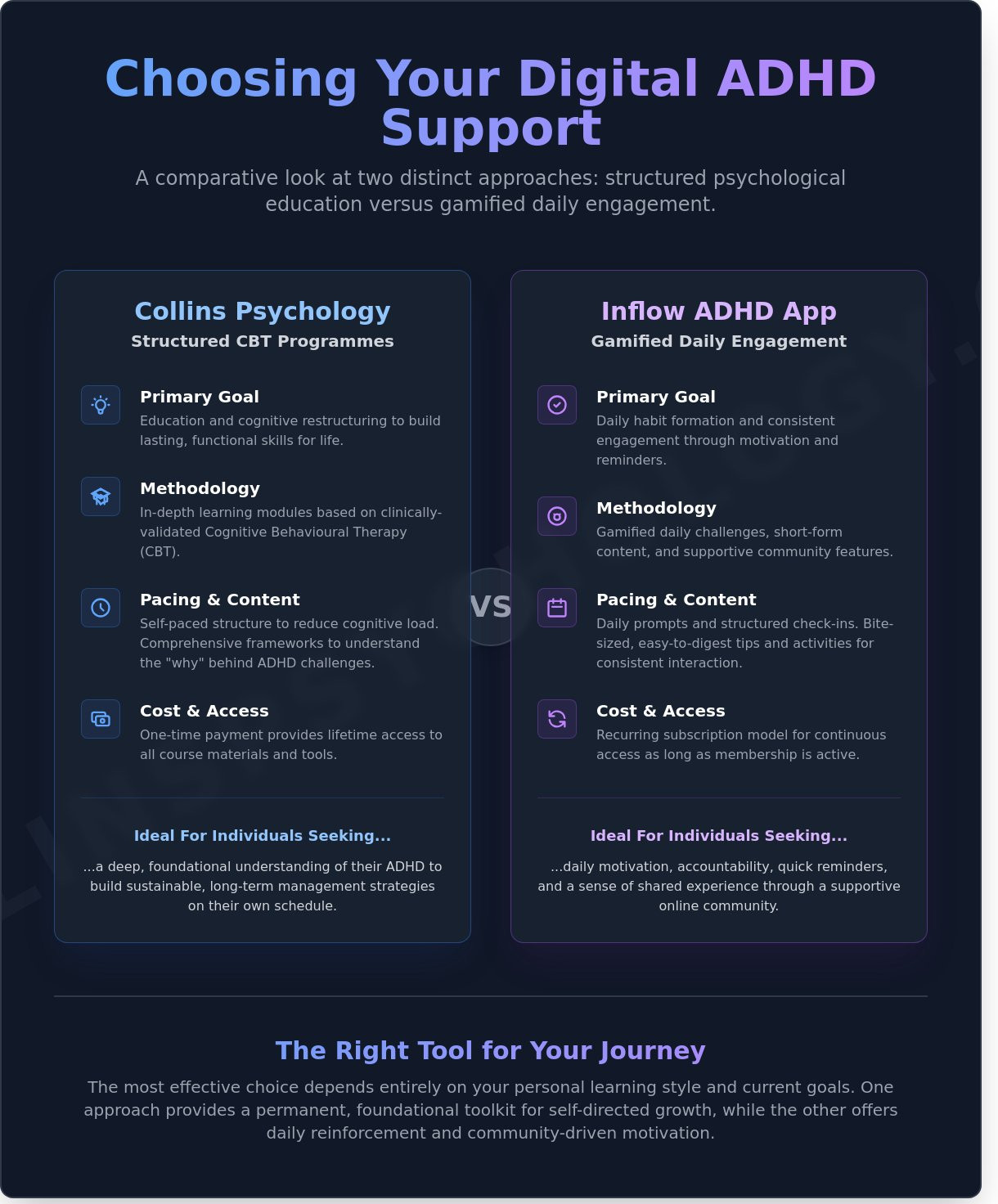
When comparing a structured clinical course to a mobile app like Inflow, it is helpful to look at their foundational approaches to learning and skill development. One model prioritises deep, sequential education in psychological theory, while the other focuses on daily, gamified interactions to build habits. Both aim to support users, but they achieve this through different means, one emphasising skill acquisition through understanding and the other through consistent practice. Consequently, their long-term sustainability and user experience are distinct, appealing to different learning styles and needs.
Learning Modality: In-Depth Modules vs. Micro-Learning
The Inflow app utilises short-form content, daily "challenges," and community features to foster consistent engagement. This micro-learning approach is designed to fit easily into a daily routine, providing bite-sized tips and reinforcement. In contrast, a clinical course, such as those covering effective goal setting for ADHD, presents information in comprehensive modules. This format is designed for learners who want to understand the psychological "why" behind the strategies, building a foundational knowledge base. The best method often depends on individual preference; some may thrive with daily prompts, while others prefer to dedicate focused time to deeper learning, particularly for complex needs like parenting with ADHD.
Investment Models and Skill Internalisation
The financial and time investment for each model also differs. Apps like Inflow typically operate on a recurring subscription model, providing continuous access to content as long as the subscription is active. Clinical courses are often offered as a one-time purchase, granting lifetime access to the material. Each model aims for skill internalisation through its unique structure. The app model encourages this through daily repetition and reinforcement, helping to automate new habits. The course model fosters internalisation by building a deep understanding of core principles, empowering the user to adapt and apply strategies flexibly to new situations long after the course is completed.
Practical Strategies for Executive Functioning and Focus
Regardless of the platform you choose, core CBT principles can help you improve focus and time management today. Many evidence-based techniques can be implemented immediately to address challenges with executive functioning. Furthermore, lifestyle factors such as fitness and nutrition are increasingly recognised for their significant intersection with ADHD symptoms. A crucial element is understanding how emotional states influence daily productivity. Research shows that emotional regulation skills are a key component in successfully managing ADHD, as they directly impact decision-making and follow-through (Safren et al., 2017).
Mastering Time Management and Goal Setting
For large, overwhelming projects, the "chunking" method is highly effective. This involves breaking the task down into smaller, more manageable steps. For example, instead of "clean the kitchen," your list might become "empty the dishwasher," "wipe the counters," and "sweep the floor." It is also vital to set realistic and measurable goals. A simple but powerful exercise is to identify your personal time blindness triggers. For a day, note every time you lose track of time or underestimate how long a task will take. Recognising these patterns is the first step toward developing better strategies for ADHD and time blindness.
Emotional Regulation in Daily Life
Improving emotional regulation often starts with awareness. Begin by noticing the physical sensations that accompany emotional dysregulation, such as a racing heart, tense shoulders, or shallow breathing. A core cognitive behavioural intervention is "the pause"—a moment taken between a trigger and your reaction. This brief space allows your thinking brain to catch up with your emotional brain, giving you the chance to choose a more measured response. For those looking to build on these foundational skills, various training materials offer deeper strategy work.
Choosing the Right Path for Your ADHD Journey
Ultimately, the most effective tool is the one that aligns with your specific needs, learning style, and goals. A self-assessment can help clarify what you are looking for. Are you seeking daily motivation and community support, or do you prefer a structured, in-depth educational experience? Both approaches are grounded in principles that support adults with ADHD. The value of any programme or app lies in its ability to provide you with sustainable strategies. Collins Psychology’s courses offer one robust, flexible, and self-paced path for those ready for a structured approach.
Is a Clinical Course Right for You?
You might find a clinical course beneficial if you feel you need more than just a habit tracker and are ready for deep-dive psychological work. If you want to understand the cognitive models behind your ADHD challenges and learn comprehensive, interconnected strategies, a course model may be a good fit. The flexibility of the Collins Psychology online programmes is designed for those who want to learn at their own pace, without the pressure of scheduled appointments or a fixed timeline.
Is a Mobile App Right for You?
A mobile app like Inflow could be the right choice if you thrive on daily interaction, gamification, and a sense of community. If you find it difficult to set aside long blocks of time for learning and prefer to absorb information in small, frequent doses, the app model is designed for you. This approach is excellent for building and maintaining daily habits through consistent reminders, positive reinforcement, and a supportive user network.
Next Steps and Enrolment
If you have decided that a structured, self-paced learning environment is the right fit for your journey, you can explore the curriculum in more detail.
• Direct readers to the CBT for Adult ADHD landing page.
• For specific programme queries, please visit the contact page.
• You can also find daily support and insights on Instagram.
Frequently Asked Questions
How does a clinical course like Collins Psychology's differ from a subscription app?
A clinical course typically provides a comprehensive, structured curriculum on the psychological principles behind ADHD management, often with a one-time purchase for lifetime access. A subscription app generally focuses on daily habit formation through micro-learning, gamification, and community features, requiring an ongoing subscription.
Does Collins Psychology offer one-to-one therapy for adults with ADHD?
No, Collins Psychology provides online, self-paced educational programmes and does not offer one-to-one therapy. The courses are designed as self-led resources.
How long does it take to complete the self-paced CBT modules?
The completion time varies for each individual, as the courses are fully self-paced. You can move through the material at a speed that feels comfortable for you, with no deadlines.
Are these ADHD courses clinically supported by Irish standards?
Yes, the courses are developed by a qualified Irish psychologist and are grounded in evidence-based Cognitive Behavioural Therapy principles that align with professional psychological guidelines in Ireland.
Can I use these strategies if I am also parenting a child with ADHD?
Many of the strategies for emotional regulation, executive functioning, and structure can be beneficial for parents with ADHD. Understanding these concepts for yourself can also provide insights into supporting your child.
What is the difference between executive functioning and emotional regulation?
Executive functioning refers to the cognitive skills that help you plan, organise, initiate tasks, and manage your time. Emotional regulation is the ability to manage and respond to emotional experiences in a healthy and adaptive way. Cognitive functioning issues in ADHD are often linked to challenges in both areas.
Do I need a formal diagnosis to start the CBT for ADHD programme?
No, a formal diagnosis is not required to enrol in and benefit from the courses. The strategies taught are helpful for anyone who experiences challenges with executive functioning and emotional regulation, which are common traits of ADHD.
How does time management training in a course differ from an app?
In a course, time management training typically involves in-depth modules explaining the psychological reasons for issues like time blindness and procrastination, followed by comprehensive strategies. An app usually addresses time management through daily reminders, timers, and task-tracking features designed to build consistent habits.
References
Ramsay, J. R. (2020). Cognitive behavioral therapy for adult ADHD: An integrative psychosocial and medical approach (2nd ed.). Routledge.
Safren, S. A., Sprich, S. E., Perlman, C. A., & Otto, M. W. (2017). Mastering your adult ADHD: A cognitive-behavioral treatment program, therapist guide (2nd ed.). Oxford University Press.