.png)

For many adults in Ireland with ADHD, life can feel like a constant battle against overwhelm. The persistent feeling of being behind, coupled with the mental exhaustion from managing daily tasks, often leads to a state of chronic stress. This is not a personal failing but a neurobiological reality of how the ADHD brain interacts with the demands of a world not built for it. This guide explores the deep-seated connection between adult ADHD and chronic stress, explains why conventional advice often falls short, and provides a structured pathway to regain control using evidence-based Cognitive Behavioural Therapy (CBT) strategies you can implement at your own pace.
Key Takeaways
ADHD and Stress are Linked
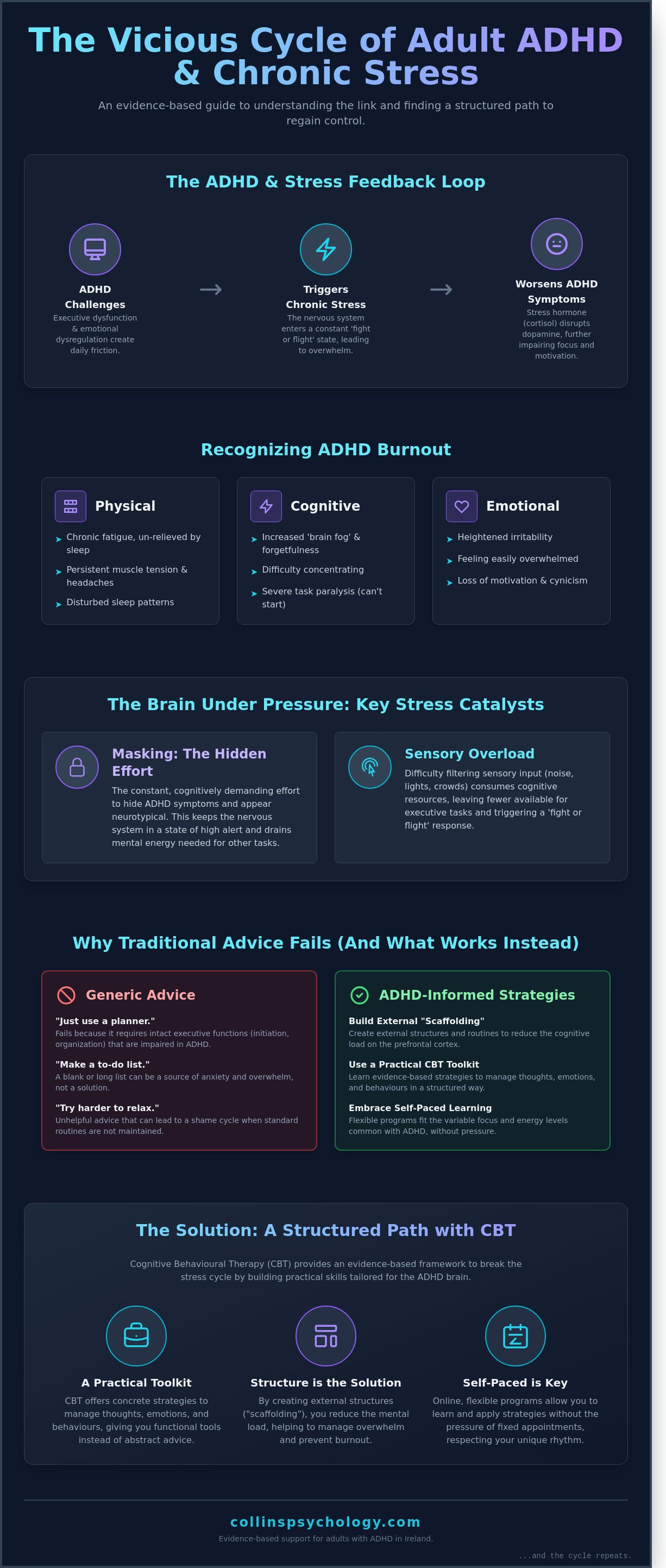
The core challenges of ADHD, such as executive dysfunction and emotional dysregulation, create a cycle where ADHD symptoms cause stress, and that stress, in turn, worsens the symptoms.
Traditional Advice Fails
Generic tips like 'just use a planner' often do not work for the ADHD brain because they fail to address the underlying executive function deficits. A structured approach is necessary.
CBT is a Practical Toolkit
Cognitive Behavioural Therapy (CBT) provides evidence-based strategies to manage thoughts, emotions, and behaviours, offering a practical framework to build skills in time management, emotional regulation, and focus.
Structure is the Solution
Creating external structures and routines, or 'scaffolding', reduces the cognitive load on the prefrontal cortex, helping to manage overwhelm and prevent burnout.
Self-Paced Learning is Key
Flexible, online CBT programmes allow you to learn and apply strategies without the pressure of fixed appointments, fitting into the variable focus and energy levels common with ADHD.
Table of Contents
• Understanding the Link Between Adult ADHD and Chronic Stress
• The Neurobiology of the ADHD Stress Cycle
• Why Traditional Stress Management Often Fails the ADHD Brain
• Evidence-Based CBT Strategies to Break the Cycle of Stress
• Implementing a Structured, Self-Paced Approach to Stress Recovery
Understanding the Link Between Adult ADHD and Chronic Stress
Chronic stress is the physiological and psychological response to long-term pressure, where the nervous system remains in a perpetual state of high alert or 'fight or flight'. For adults with ADHD, this state is not just a reaction to major life events; it is often a baseline condition fuelled by the daily challenges of navigating life with executive dysfunction (Arnsten, 2009). This constant pressure is sometimes referred to as the 'ADHD Tax', the extra time, effort, and mental energy required to accomplish tasks that may seem straightforward to neurotypical individuals. This cumulative burden is a significant contributor to the high rates of burnout observed among adults with ADHD in Ireland and across Europe. Breaking this cycle requires more than simple relaxation techniques; it demands evidence-based clinical interventions designed for the neurodivergent brain.
Common Signs of ADHD-Related Burnout
ADHD burnout is a state of profound exhaustion that impacts every area of life. It can manifest in several ways:
Physical symptoms
Chronic fatigue that is not relieved by sleep, persistent muscle tension, headaches, and disturbances in sleep patterns.
Cognitive signs
A noticeable increase in forgetfulness and 'brain fog', difficulty concentrating, and severe task paralysis, where even starting a simple task feels impossible.
Emotional markers
Heightened irritability, feeling emotionally 'thin-skinned' or easily overwhelmed, a loss of motivation for activities once enjoyed, and a sense of cynicism or detachment.
Why Emotional Regulation is Central to the Stress Experience
Emotional regulation is a core challenge in ADHD and a primary driver of the stress experience. The ADHD brain can struggle to apply the 'brakes' to emotional responses, leading to reactions that feel disproportionate to the situation (Shaw et al., 2014). This is compounded by concepts like Rejection Sensitive Dysphoria (RSD), an intense emotional pain experienced in response to perceived or real rejection, criticism, or failure. This heightened sensitivity can make social and professional interactions a constant source of stress. Furthermore, a low frustration tolerance means that minor setbacks can trigger a rapid and overwhelming stress response, making it difficult to persist with challenging tasks.
The Neurobiology of the ADHD Stress Cycle
The connection between ADHD and stress is hardwired into the brain's neurobiology. The prefrontal cortex, the brain region responsible for executive functions like planning, decision-making, and impulse control, is also central to regulating the body's stress response. In individuals with ADHD, differences in this area can impair both executive function and stress management (Arnsten, 2009). The stress hormone, cortisol, has a complex relationship with dopamine, a key neurotransmitter in ADHD. High levels of chronic stress can disrupt dopamine regulation, further impairing focus, motivation, and emotional stability. This creates a vicious feedback loop: ADHD symptoms cause stress, and the resulting release of cortisol worsens executive function, which in turn leads to more stress. Research suggests the long-term impact of this untreated cycle on neurodivergent adults can be significant, affecting both mental and physical health.
Executive Function and Cortisol: A Complicated Relationship
When executive functions like working memory fail, it can trigger an 'emergency' mode of thinking. Forgetting a crucial deadline or misplacing important documents forces the brain to operate in a state of crisis, flooding the system with cortisol. This is intensified by the mental energy spent on 'masking', the conscious or unconscious effort to hide ADHD symptoms in professional and social settings to appear neurotypical. This constant self-monitoring is cognitively demanding and keeps the nervous system in a state of high alert, making it difficult for the ADHD brain to return to a baseline state of calm.
Sensory Overload as a Stress Trigger
Many adults with ADHD also experience sensory processing issues, where the brain struggles to filter and manage incoming sensory information. An open-plan office, a busy supermarket, or even multiple conversations happening at once can become overwhelming. This sensory noise consumes limited cognitive resources, leaving fewer available for executive tasks and triggering the 'fight or flight' response (Barkley, 2015). Common sensory triggers in the workplace and home, such as fluorescent lighting, background noise, or strong smells, can act as constant, low-level stressors that contribute to chronic overwhelm.
Why Traditional Stress Management Often Fails the ADHD Brain
Well-intentioned but generic advice like 'just use a planner', 'make a to-do list', or 'try to relax' often fails adults with ADHD. This is because such advice presumes that the underlying executive functions needed to implement these strategies are fully intact. For a brain struggling with initiation, organisation, and working memory, a blank planner can be a source of anxiety, not a solution. The message to 'try harder' is particularly unhelpful, as most adults with ADHD have spent their lives trying harder than their peers with less to show for it. This can lead to a shame cycle, where the failure to maintain standard routines is internalised as a personal failing rather than a symptom of a neurological condition. This is why Cognitive Behavioural Therapy (CBT) is considered a gold-standard approach; it does not ask you to simply 'try harder' but instead focuses on building the skills and structural supports your brain needs to succeed (Safren et al., 2017).
The Trap of Perfectionism and Masking
To compensate for their challenges, many adults with ADHD develop perfectionistic tendencies. Setting impossibly high standards for themselves becomes a way to avoid criticism and feelings of failure. However, this creates a permanent state of high alert and anxiety, as the goal is always just out of reach. The mental energy required to mask symptoms and maintain this facade of perfection for colleagues, friends, and family is immense and a direct pathway to burnout. A core clinical goal in CBT is learning to challenge this perfectionism and develop self-compassion.
Why Structure is the Antidote to Overwhelm
The key to managing ADHD-related stress is not about imposing rigid, unforgiving rules, but about creating 'supportive scaffolding'. These are external structures, routines, and systems that reduce the cognitive load on the prefrontal cortex. By externalising reminders, breaking down tasks, and automating decisions, you free up mental energy to focus on what truly matters. This approach aligns with guidance from professional bodies like the Psychological Society of Ireland (PSI), which advocate for supportive interventions that accommodate and work with an individual's neurotype, rather than against it.
Evidence-Based CBT Strategies to Break the Cycle of Stress
Cognitive Behavioural Therapy (CBT) is a practical, skills-based approach that provides a toolkit to restructure the patterns of thinking and behaviour that fuel the stress cycle. It uses both 'Top-Down' strategies (changing your thoughts to change your feelings) and 'Bottom-Up' strategies (regulating your body to calm your mind). Foundational pillars like improving sleep, engaging in physical fitness, and creating systems for focus are central to this work. These evidence-based strategies are integrated into structured CBT programmes to provide a clear path forward.
Mastering Time Management and Goal Setting
CBT offers concrete techniques to manage 'time blindness', the common ADHD difficulty in perceiving the passage of time. This includes using external cues like timers and visual schedules to make time tangible. To overcome task paralysis, large and stressful projects are broken down into manageable 'micro-goals'. Achieving these small wins provides a dopamine boost that builds momentum and reduces the sense of overwhelm.
Learn more with our course
Improving Executive Function through Habit Stacking
Habit stacking involves anchoring a new, desired habit to an existing one, reducing the executive function required to initiate it. For example, you might 'stack' the habit of planning your day onto your existing habit of drinking a morning coffee. CBT also provides structured approaches for improving sleep hygiene and incorporating physical movement, both of which are critical for brain health and stress resilience (Safren et al., 2017).
Build better systems with our course
Emotional Regulation and Focus Techniques
A core component of CBT involves learning to identify and challenge 'cognitive distortions', which are unhelpful thinking patterns that fuel anxiety and stress (e.g., catastrophising or black-and-white thinking). By examining the evidence for these thoughts, you can develop more balanced and realistic perspectives. Mindfulness-informed CBT tools also help you practise staying in the present moment, which interrupts cycles of worry about the future or rumination about the past.
Develop emotional control with our course
Implementing a Structured, Self-Paced Approach to Stress Recovery
It is important to clarify that Collins Psychology provides online, self-paced CBT programmes and does not offer one-to-one therapy. This model is intentionally designed to be accessible and effective for the ADHD brain. Self-paced learning offers high flexibility without the pressure of scheduled appointments, allowing you to engage with the material when you feel most focused and receptive. The resources, exercises, and tools provided in our programmes can be used at your own pace, empowering you to take the first step towards a calmer, more regulated life on your own terms.
The Benefits of Self-Paced Online Learning
This modern approach to learning offers several distinct advantages for adults with ADHD:
Eliminating the 'executive function cost'
: There is no need to remember appointments, arrange transport, or navigate the logistics of attending physical sessions.
The ability to revisit modules
: You can review complex concepts or techniques as many times as you need, whenever you need a refresher.
Privacy and autonomy
: It provides a confidential and independent way to manage your mental health journey, putting you in control.
Getting Started with the Collins Psychology Programme
Our collection of courses on Thinkific provides a comprehensive toolkit to help you build the skills necessary to manage ADHD and reduce chronic stress. The programmes are designed to help you set up a low-friction environment for successful learning, with practical exercises you can apply to your life immediately. You have the power to break the cycle of stress and build a life with better focus and more calm.
Start your journey to better focus and less stress today.
Frequently Asked Questions
How does ADHD cause chronic stress in adults?
ADHD causes chronic stress through a combination of factors. Executive function challenges in areas like time management, organisation, and task initiation create constant daily pressure. Emotional dysregulation and heightened sensitivity to rejection make social and professional situations more stressful. This creates a feedback loop where ADHD symptoms lead to stress, which then impairs executive function further.
Can CBT really help with ADHD symptoms if I do not see a therapist one-to-one?
Yes. Structured, self-paced CBT programmes are designed to teach you the same evidence-based skills and strategies you would learn in therapy. They provide the tools to identify unhelpful thought patterns, build better habits, and create systems that support your executive function. For many, the flexibility and autonomy of a self-paced model is more effective than traditional therapy.
What is the difference between ADHD burnout and general depression?
While there can be overlapping symptoms like fatigue and low motivation, they are distinct. ADHD burnout is primarily a state of exhaustion caused by the chronic stress of trying to meet life's demands with impaired executive function. Depression is a mood disorder characterised by persistent low mood, and loss of interest or pleasure. It is possible to experience both, and if you are concerned about your mood, it is important to consult a GP.
How long does it take to see results from a self-paced CBT program?
The timeline varies for everyone. Some people notice small improvements in their awareness and daily management within a few weeks of consistently applying the techniques. Significant, lasting change comes from practising the skills over time until they become integrated into your daily routines. The benefit of a self-paced programme is that you can move at the speed that works for you.
Why is time management so much harder when I am stressed?
Stress has a direct impact on the prefrontal cortex, the part of the brain responsible for executive functions like planning and time management. When you are stressed, the brain shifts into 'fight or flight' mode, diverting resources away from long-term planning towards immediate survival. This makes it significantly harder to think clearly, organise tasks, and manage your time effectively.
Is this CBT programme suitable for parents with ADHD?
Absolutely. The strategies for managing stress, improving executive function, and regulating emotions are foundational skills that can make parenting feel less overwhelming. By building your own 'scaffolding' and learning to manage your stress, you are better equipped to handle the demands of family life and model healthy coping skills for your children.
What are the most effective executive function tools for stress?
Effective tools are those that externalise executive functions. This includes using digital or paper calendars for all appointments, setting audible timers for tasks (the 'Pomodoro Technique'), using whiteboards for brainstorming and planning, and creating checklists for recurring routines (like a morning or evening routine). The goal is to reduce the amount of information you have to hold in your working memory.
How do I know if I have chronic stress or just a busy week?
A busy week leads to temporary, situational stress that resolves once the pressure is off. Chronic stress is a persistent state of feeling overwhelmed, anxious, and fatigued, even when there is no immediate crisis. If you feel you are constantly in 'survival mode', struggle to relax, and experience physical or emotional symptoms of burnout for weeks or months, you are likely dealing with chronic stress.
References
Arnsten, A. F. T. (2009). Stress signalling pathways that impair prefrontal cortex structure and function. Nature Reviews Neuroscience, 10(6), 410–422. https://doi.org/10.1038/nrn2648
Barkley, R. A. (2015). Attention-deficit hyperactivity disorder: A handbook for diagnosis and treatment (4th ed.). The Guilford Press.
Safren, S. A., Sprich, S. E., Perlman, C. A., & Otto, M. W. (2017). Mastering your adult ADHD: A cognitive-behavioral treatment program, therapist guide (2nd ed.). Oxford University Press.
Shaw, P., Stringaris, A., Nigg, J., & Leibenluft, E. (2014). Emotional dysregulation and attention-deficit/hyperactivity disorder. American Journal of Psychiatry, 171(3), 276–293. https://doi.org/10.1176/appi.ajp.2013.13070966