.png)
For many adults, the experience of Attention Deficit Hyperactivity Disorder (ADHD) is not about climbing the walls but about an internal engine that never switches off. This constant sense of inner restlessness, combined with a tendency to act before thinking, can create significant challenges in careers, finances, and relationships. This article explores how hyperactivity and impulsivity present in adulthood and introduces structured, evidence-based Cognitive Behavioural Therapy (CBT) strategies to help you move from feeling overwhelmed to being in control. Discover how to transform restless energy and impulsive urges into focused action through these psychological systems.
Key Takeaways
Adult Hyperactivity is Often Internal
In adults, hyperactivity typically shifts from the overt physical restlessness seen in childhood to a more internalised state of mental restlessness, racing thoughts, and an inability to relax.
Impulsivity Stems from Brain Function
Impulsive actions are linked to differences in the brain's executive functioning, particularly in an area called the prefrontal cortex, which is responsible for response inhibition or the "braking system".
CBT Provides Practical Tools
Cognitive Behavioural Therapy offers a structured framework for managing these symptoms without medication, focusing on skills like the "Stop-Think-Act" technique to create a crucial pause before acting.
Self-Paced Learning is Effective
Structured online programmes allow adults with ADHD to learn and apply these skills flexibly, building systems that work with their brain's unique wiring.
Table of Contents
• Understanding Hyperactivity and Impulsivity in Adulthood
• The Cognitive Mechanics of Impulsive Behaviour
• Internalised Hyperactivity: The "Quiet" Struggle
• Evidence-Based CBT Strategies for Daily Regulation
• Structured Online Learning for ADHD Symptom Management
Understanding Hyperactivity and Impulsivity in Adulthood
Hyperactivity and impulsivity are core features of ADHD, but they often look very different in adults compared to children. Adult hyperactivity is less about running and jumping and more about a persistent feeling of inner restlessness or being constantly on the go (Ramsay, 2023). Impulsivity manifests as an "action before thought" pattern, leading to hasty decisions, abrupt comments, or impulsive purchases that can have lasting consequences. These traits are recognised within the diagnostic criteria and professional guidelines of bodies like the Psychological Society of Ireland (PSI), and understanding them is the first step toward effective management.
The Shift from Physical to Mental Restlessness
The classic image of a hyperactive child running around a classroom rarely translates directly to adulthood. Instead, that physical energy "morphs" into a powerful mental motor that can feel impossible to switch off. In a corporate setting, this might look like fidgeting during meetings, constantly changing tasks, or feeling an overwhelming urge to get up and walk around. At home, it could be an inability to sit through a film or relax without multitasking. This internal drive often fuels verbal impulsivity, such as interrupting others or finishing their sentences, which can strain social and professional relationships.
Why Symptom Recognition is the First Step
Recognising these patterns as symptoms of a neurodevelopmental condition, rather than as character flaws, is a crucial mindset shift. Many adults with undiagnosed ADHD spend years blaming themselves for being "lazy," "undisciplined," or "rude," without realising their brain is wired differently. A structured approach to tracking symptoms helps to differentiate between occasional personality quirks and persistent, life-impacting patterns. This process moves you away from self-blame and toward a clinical understanding, which is the foundation for building effective coping strategies.
The Cognitive Mechanics of Impulsive Behaviour
Impulsive behaviour in adults with ADHD is not a choice but a result of differences in brain structure and function. Research consistently points to a deficit in "Response Inhibition," which is the brain's ability to stop an automatic or prepotent response (Barkley, 2022). This cognitive process is largely managed by the prefrontal cortex, a region responsible for executive functions like planning, decision making, and self-control. When this area functions differently, the brain struggles to filter urges, leading to the "snap" decisions and actions characteristic of impulsivity. This is often compounded by a dopamine-seeking pattern, where the brain is drawn to novel or high-stimulation activities, sometimes leading to impulsive risk-taking.
Executive Function and the "Braking" System
Think of executive functions as the management system of your brain, and response inhibition as its primary braking system. For many adults with ADHD, the delay between a stimulus (an idea, an urge, a comment) and a response is significantly shorter. The brain struggles to "pause" and evaluate the potential long-term consequences of an action, prioritising immediate gratification instead. This difficulty in pausing is also closely linked to emotional regulation, as the inability to inhibit a response can lead to quick frustration or emotional outbursts.
The Emotional Cost of Impulsivity
The consequences of impulsive actions often extend beyond the immediate event, leading to cycles of regret, shame, and anxiety. An impulsive comment can damage a relationship, while an unplanned spending spree can create significant financial stress. These outcomes can trigger "shame spirals," reinforcing negative self-beliefs and contributing to social anxiety. Furthermore, a low tolerance for frustration can combine with impulsivity to produce emotional outbursts, which are often mismanaged attempts to regulate an overwhelming internal state. Learning to manage these intense feelings is a key part of gaining control, and you can learn more about the link between ADHD and emotional over-arousal.
Internalised Hyperactivity: The "Quiet" Struggle
While impulsivity is often an external behaviour, hyperactivity in adults is frequently an internal, "quiet" struggle. This manifests as racing thoughts, where the mind jumps from one topic to another without rest, making it difficult to focus or relax. This creates a confusing paradox: you can feel utterly exhausted from the constant mental activity, yet be physically unable to sit still or fall asleep. In high-pressure Irish workplaces, these internalised symptoms can quickly lead to burnout, as the mental "fidgeting" prevents the deep work and concentration needed to perform effectively.
Racing Thoughts and Decision Fatigue
The experience of internalised hyperactivity is often described as having a web browser with countless tabs open simultaneously in your mind. Each tab represents a different thought, worry, or idea, all competing for your attention at once. This constant mental noise makes it incredibly difficult to choose a single task and see it through, leading to decision fatigue even with simple choices. For example, trying to decide what to have for dinner can feel as overwhelming as a major work project when your mind is racing.
Hyperactivity and Sleep Hygiene
The "wired but tired" feeling is a common complaint for adults with ADHD. At night, when external distractions fade, the internal motor can kick into high gear, making it nearly impossible to quiet the mind for sleep. Physical exhaustion from the day does not guarantee mental rest, leading to a cycle of poor sleep, fatigue, and worsened ADHD symptoms. Integrating regular physical movement and fitness into your routine can be a powerful way to help regulate this cognitive motor, providing a healthy outlet for restless energy and improving your ability to rest.
The Stop-Think-Act Framework
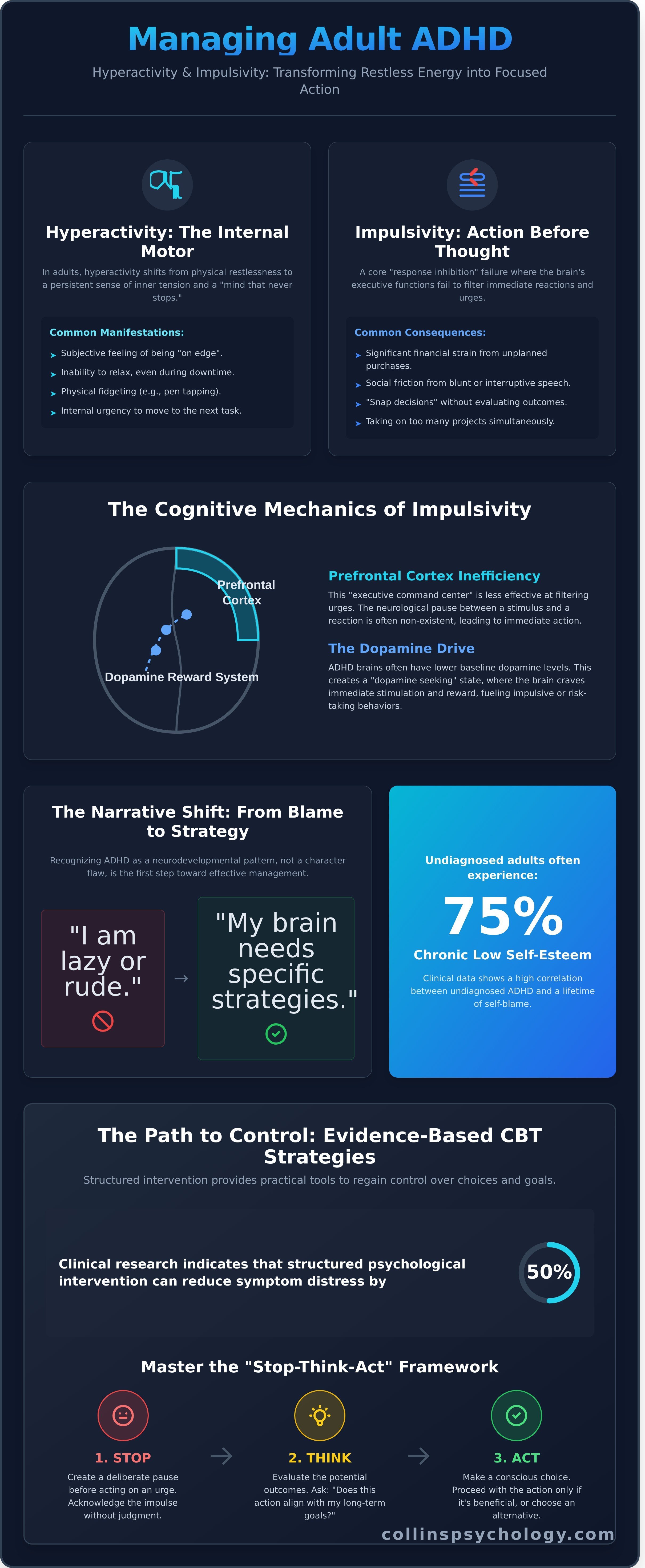
Make a conscious choice. Either proceed with the original action if it still makes sense, choose the better alternative, or decide to do nothing at all. You are now in control.
Evidence-Based CBT Strategies for Daily Regulation
Cognitive Behavioural Therapy (CBT) provides a practical, skills-based approach to managing hyperactivity and impulsivity. It focuses on changing the thought patterns and behaviours that drive these symptoms. A cornerstone technique is the "Stop-Think-Act" framework, which intentionally creates a mental pause to allow your logical brain to catch up with your impulsive brain. Other strategies include environmental engineering, such as unsubscribing from marketing emails to reduce spending triggers, and cognitive restructuring, where you actively challenge and reframe thoughts like "I need to have this now." Using time delays, such as waiting 24 hours before making a non-essential purchase, is another powerful psychological tool for promoting better decision-making.
Foundational Strategies for Emotional Regulation
A key part of managing impulsivity is learning to recognise the early warning signs of an emotional or impulsive "surge." This might be a physical sensation like a racing heart or a mental feeling of urgency. Once you identify this sign, you can use breathing and grounding techniques to calm your nervous system and re-engage your logical mind. These skills are fundamental to building better self-control and are a core component of our CBT for Emotional Regulation system.
Practical Goal Setting and Focus
Impulsivity can also derail long-term goals, as the appeal of a new, "shiny" object often outweighs a pre-existing plan. CBT helps you break down large, overwhelming goals into small, manageable steps, making them less intimidating and easier to start. Using "external brains" like planners, calendars, and apps is essential for keeping these plans visible and curbing the impulse to deviate. These methods help you build reliable systems so you can stop relying on motivation and finally know what to do and actually do it, a process we guide you through with our Executive Function tools.
Structured Online Learning for ADHD Symptom Management
For many adults with ADHD, the idea of committing to weekly, in-person appointments can feel overwhelming. The ADHD brain often thrives on flexibility and autonomy, which is why self-paced online learning can be a particularly effective approach. Structured modules allow you to learn evidence-based skills at your own pace, revisiting concepts as needed, without the pressure of a fixed schedule. Collins Psychology provides these tools for independent growth, helping you build systems that work with your brain.
Flexible Learning Without the Waitlist
Our online programmes provide immediate access to clinically supported tools you can use from the comfort of your home. It is important to clarify that our programmes are self-paced and do not include one-to-one therapy. This model is designed to integrate seamlessly into a busy Irish lifestyle, allowing you to learn when and where it works best for you. This is not therapy and not coaching, but a system designed to help you build your ADHD support system over time, starting where you struggle most.
Taking the Next Step Toward Control
Moving from passively reading about ADHD to actively building skills is the most important step you can take. Our systems offer multiple entry points, allowing you to begin with the area that impacts you most, whether that is emotional regulation, focus, or planning. A great place to start is often with our Goal Setting module, which provides a foundation for creating meaningful, lasting change. Stop starting over every Monday and begin building a system that brings you closer to your goals.
Start your journey to better self-regulation with our self-paced CBT programs.
Frequently Asked Questions (FAQs)
Is hyperactivity always physical in adults with ADHD?
No, hyperactivity in adults often presents as an internal feeling of restlessness. This can include racing thoughts, an inability to relax, talking excessively, or feeling a constant need to be busy or productive.
How does impulsivity affect adult relationships and communication?
Impulsivity can strain relationships by leading to hurtful comments said without thinking, interrupting others frequently, or making major life decisions (like quitting a job or ending a relationship) without consulting a partner. It can make communication feel unpredictable and difficult for others.
Can Cognitive Behavioural Therapy really help with impulsive spending?
Yes, CBT is very effective for impulsive spending. It teaches you to identify the triggers and thoughts that lead to the urge to spend, and then provides strategies like the "Stop-Think-Act" technique and a 24-hour waiting period to create a pause for more rational decision-making.
What is the difference between being spontaneous and being impulsive?
Spontaneity is generally positive and involves making a fun, in-the-moment choice that does not have significant negative consequences. Impulsivity, in a clinical context, refers to hasty actions made without adequate thought, which often lead to regret or negative outcomes.
How can I manage the feeling of inner restlessness at work?
Strategies include taking short, scheduled breaks to walk around, using fidget tools discreetly, channelling restless energy into a task, and practising mindfulness or breathing exercises to calm your mind. Breaking your workday into smaller, focused chunks can also help.
Are these CBT programmes suitable if I do not have a formal diagnosis?
Yes. The skills and strategies taught in our programmes are designed to help with the symptoms of hyperactivity, impulsivity, and inattention, regardless of whether you have a formal ADHD diagnosis. They are practical life skills that can benefit anyone struggling with these challenges.
What is the "Stop-Think-Act" technique in CBT?
It is a simple but powerful three-step process to manage impulsive urges. You first STOP what you are doing and take a breath. Then, you THINK about the potential consequences of your action. Finally, you ACT by making a conscious decision, rather than reacting automatically.
How long does it take to see results from a self-paced CBT program?
Results vary for each individual, but many people begin to notice small, positive changes within a few weeks of consistently applying the techniques. The key is regular practice, as you are building new mental habits and strengthening neural pathways in your brain.
References
Barkley, R. A. (2022). Executive functions: What they are, how they work, and why they evolved. The Guilford Press.
Ramsay, J. R. (2023). Rethinking adult ADHD: A new approach from the inside out. American Psychological Association.