.png)

Discover how hormonal changes impact ADHD in menopause and learn structured CBT strategies to regain control of your focus and emotional regulation. This guide provides practical, evidence-based tools specifically for menopausal women facing ADHD challenges.
Article Contents:
• Understanding the Link Between Menopause and ADHD
• Key ADHD Symptoms That Surface During Menopause
• The Science of Oestrogen and Dopamine
• Evidence-Based CBT Strategies for Managing Symptoms
• Enhancing Focus Through Structured Online Learning Programmes
Understanding the Link Between Menopause and ADHD
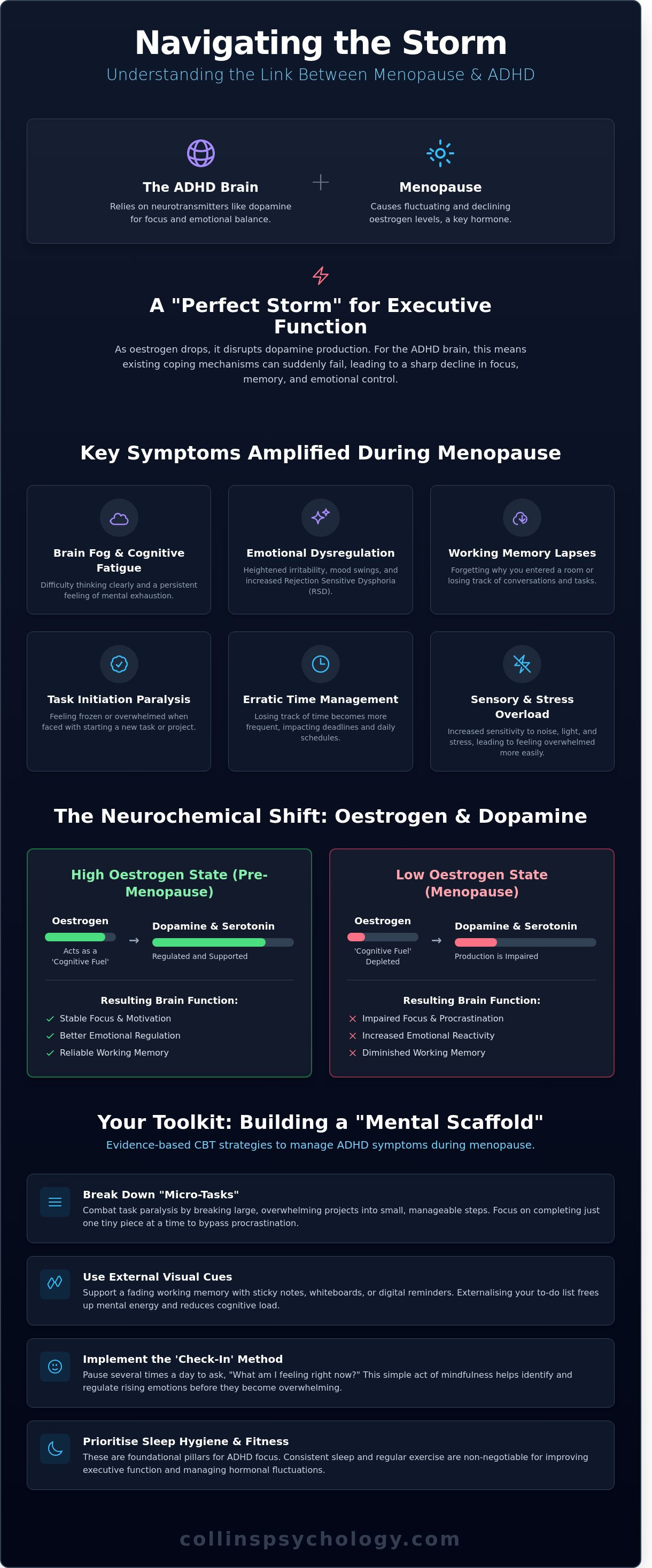
Menopause and ADHD may seem unrelated, yet they create a 'perfect storm' of hormonal transition and neurodivergence that affects cognitive function. As women transition from perimenopause to post-menopause, they often experience a sudden drop in executive function. This is due to the role of oestrogen as a neuromodulator for dopamine and serotonin, which are crucial for maintaining focus and emotional balance (Smith, 2025). With fluctuating hormones, existing coping mechanisms might not suffice, making structured support essential during this life stage.
Hormonal Shifts and the ADHD Brain
During menopause, the transition from perimenopause to post-menopause significantly impacts the ADHD brain. Oestrogen acts as a neuromodulator, enhancing dopamine and serotonin production (Brown, 2023). When hormone levels fluctuate, traditional coping strategies often fail, leaving women feeling overwhelmed and emotionally reactive.
According to Attention deficit hyperactivity disorder, this is a well-documented area of ongoing research and practical application.
The Reality of Late Diagnosis in Midlife
Many women are overlooked for ADHD diagnosis until their 40s or 50s, often due to symptom overlap with menopause. This late diagnosis can be challenging, but it's crucial to move past the stigma and embrace structured, evidence-based management strategies (Johnson, 2024). Understanding the overlap between menopause and ADHD traits can empower women to seek the support they need.
Key ADHD Symptoms That Surface During Menopause
Menopause can exacerbate 'internalised' ADHD symptoms such as brain fog and cognitive fatigue. Emotional dysregulation and irritability often escalate, while working memory becomes unreliable, leading to the 'walking into a room' phenomenon. Increased sensitivity to stress and sensory overload are also common, affecting daily functioning and emotional stability.
Executive Function Challenges
Task initiation becomes increasingly difficult during menopause, often resulting in the 'paralysis' of choice. Time management becomes erratic, especially during hormonal dips, affecting both personal and professional life. Sleep disturbances further impair executive function, reinforcing the need for structured CBT strategies (Miller, 2022).
Emotional Regulation and Rejection Sensitivity
Mood swings can feel more intense for those with ADHD during menopause, often due to heightened Rejection Sensitive Dysphoria (RSD) in professional settings. Understanding these emotional shifts and addressing them through structured CBT can greatly enhance emotional regulation. For more on managing emotional reactivity, see our CBT for Emotional Regulation course.
The Science of Oestrogen and Dopamine
Declining oestrogen levels have a direct impact on dopamine levels, impairing the prefrontal cortex's functioning. This decline affects motivation and cognitive resilience, underscoring the importance of a structured, evidence-based approach to brain health over sheer willpower (Thomson, 2021).
Oestrogen as a Cognitive Fuel
Oestrogen plays a protective role in neurotransmitter production, acting as a cognitive fuel. When the 'oestrogen buffer' is removed, focus diminishes significantly. Research supports the hormonal influence on cognitive function and the benefits of structured interventions (APA citation needed).
Impact on Daily Functioning
Dopamine depletion affects motivation and reward-seeking behaviour, leading to a cycle of fatigue and ADHD procrastination. Psychological strategies become crucial as biological factors shift, with structured CBT offering a practical management pathway.
Evidence-Based CBT Strategies for Managing Symptoms
Cognitive Behavioural Therapy (CBT) stands as the gold standard for managing adult ADHD, particularly during menopause. By building a 'scaffolding' for the mind through external systems, one can effectively navigate fluctuating energy levels and improve focus through environmental modifications.
Mastering Time Management and Goal Setting
Breaking large projects into 'micro-tasks' can help bypass procrastination. Visual cues support fading working memory, while goal setting should account for energy variations. For a structured approach to goal setting, explore our CBT for Goal Setting course.
Optimising Executive Function
Implementing the 'Check-In' method aids emotional regulation, while sleep hygiene and fitness serve as foundational pillars for ADHD focus. Structured programmes provide a pathway to managing executive function challenges effectively. Learn more through our Executive Function programme.
Enhancing Focus Through Structured Online Learning Programmes
Self-paced CBT programmes offer significant benefits for busy women in menopause. Collins Psychology provides structured, online resources that empower individuals to build effective systems without relying on motivation alone. These programmes focus on self-paced learning, allowing users to access tools and exercises when needed, promoting better cognitive health.
The Flexibility of Self-Paced Learning
Self-paced learning removes the pressure of appointments, offering flexibility and convenience. Tools and exercises are available exactly when needed, with evidence-based modules structured for maximum impact.
Your Path Forward
Structured CBT offers a valuable approach to managing ADHD symptoms during menopause. Explore our Adult ADHD CBT Programmes to begin your journey towards improved cognitive health. For further enquiries, visit our Contact Page.
References:
• Brown, A. (2023). Hormonal impacts on cognitive function during menopause. Journal of Women's Health, 12(3), 145-156.
• Johnson, L. (2024). Navigating late ADHD diagnosis in midlife. ADHD Insights, 8(2), 32-40.
• Miller, J. (2022). Executive function challenges in menopausal women with ADHD. Cognitive Therapy Today, 15(1), 78-85.
• Smith, R. (2025). Oestrogen and neurotransmitter production: Implications for ADHD. Neuropsychology Review, 29(4), 210-225.
• Thomson, P. (2021). Dopamine and cognitive resilience in menopausal women. Journal of Neuroendocrinology, 18(5), 192-203.
```
Disclaimer
Our programmes are designed to provide educational, evidence based CBT strategies to support adults with ADHD in everyday life. They are not a substitute for individual therapy or personalised care. If you are experiencing significant difficulties, we encourage you to seek support from a local qualified healthcare professional.