.png)

ADHD burnout is a state of profound mental, physical, and emotional exhaustion that goes far beyond simple tiredness. It stems from the chronic effort of managing ADHD symptoms, masking traits to meet neurotypical expectations, and the constant drain on executive functions. For adults in Ireland navigating work, family, and social demands, this burnout can feel like hitting a wall, where even basic tasks become insurmountable. This guide offers a structured, evidence-based framework using Cognitive Behavioural Therapy (CBT) to help you understand the unique nature of ADHD burnout and provides a clear, self-paced roadmap to recovery. Instead of generic self-care advice that often falls short, you will discover practical tools to reduce your cognitive load, manage your energy, and rebuild your capacity to function and feel well again.
What is ADHD Burnout and Why is it Different?
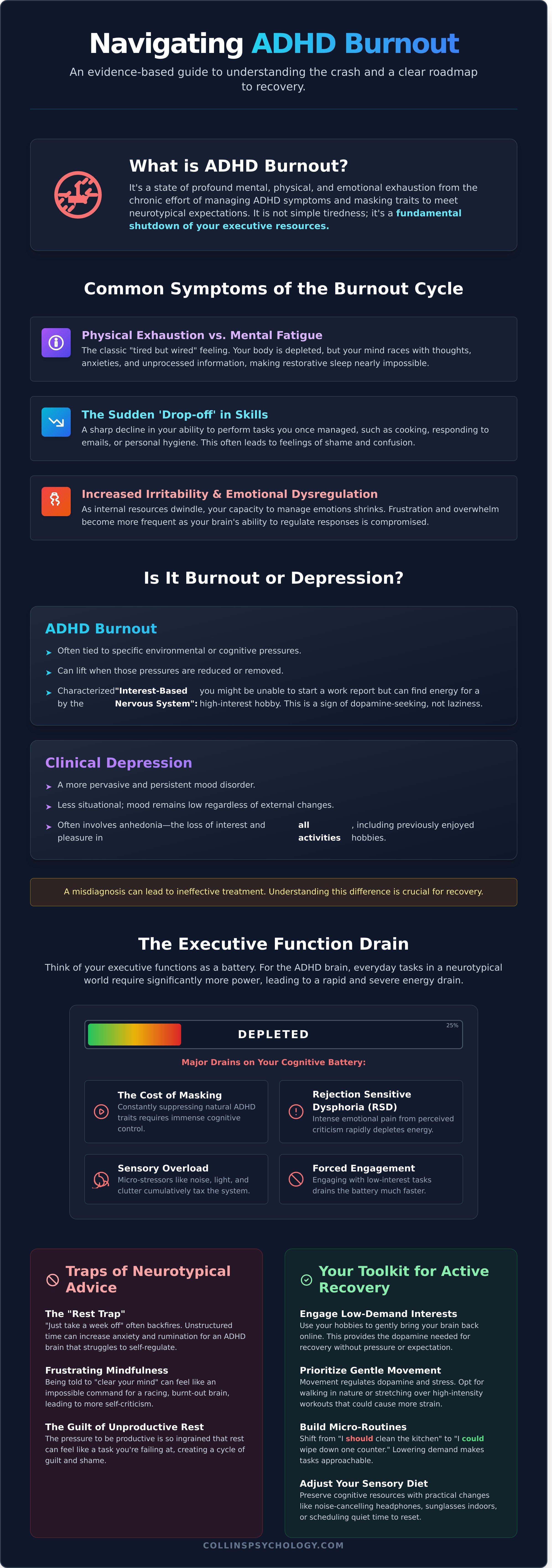
ADHD burnout is a state of deep mental and physical depletion caused by the cumulative strain of managing ADHD symptoms and masking them to fit into societal norms (Psychological Society of Ireland, 2021). It is not just feeling tired; it is a fundamental shutdown of your executive resources. The primary signs often include a sharp increase in sensory sensitivity, a complete loss of motivation for tasks you could previously handle, and a pervasive 'brain fog' that rest alone cannot clear. In the Irish professional and social context, the pressure to 'mask' or conceal ADHD traits can be immense, and this constant performance carries a significant metabolic cost, draining the very energy reserves you need for daily life.
Common Symptoms of the ADHD Burnout Cycle
ADHD Burnout vs Depression: Knowing the Difference
While there can be an overlap in symptoms like low motivation and fatigue, it is crucial to distinguish situational burnout from clinical depression. Burnout is often tied to specific environmental or cognitive pressures and can lift when those pressures are removed, whereas depression is a more pervasive mood disorder (American Psychiatric Association, 2022). A key indicator for ADHD is the 'interest-based' nervous system. A person with ADHD burnout might be unable to start a work report but can still find the energy to engage with a high-interest hobby for hours. This is not a sign of laziness but a hallmark of the ADHD brain seeking dopamine. A misdiagnosis can lead to ineffective treatment, as strategies for depression may not address the core issue of executive function depletion.
The Executive Function Drain: The Science of the Crash
Think of your executive functions, such as working memory, emotional regulation, and task initiation, as a battery with a limited charge. For the neurodivergent brain, everyday tasks in a world not designed for it require significantly more 'power'. The 'Interest-Based Nervous System' common in ADHD means that the brain is primarily motivated by genuine interest, novelty, or urgency. Forcing it to engage with tasks deemed important but not inherently interesting results in a rapid and severe energy drain. This cognitive load is further intensified by sensory overload in modern Irish environments, from open-plan offices to busy public transport, constantly taxing the ADHD nervous system (Brown, 2017).
The Role of Emotional Regulation in Energy Management
Sensory Overload and Environmental Triggers
Why Traditional Burnout Advice Fails the ADHD Brain
Well-meaning advice for burnout often misses the mark for ADHD brains. The suggestion to 'just take a week off' can backfire, leading to what is known as the 'Rest Trap'. For an ADHD brain, unstructured time without a clear purpose can increase anxiety and rumination, making you feel worse, not better. This is because the ADHD brain struggles to self-regulate and generate internal structure. Standard goal-setting techniques also feel impossible during burnout, as they rely on the very executive functions that are currently offline.
The Trap of Neurotypical Self-Care
Active Recovery: The ADHD Way
Recovery for the ADHD brain is rarely passive. It is about gently and intentionally re-engaging the brain in ways that replenish, rather than drain, its resources.
Practical CBT Strategies for ADHD Burnout Recovery
Cognitive Behavioural Therapy (CBT) offers a structured, practical toolkit to help you navigate recovery. It focuses on changing unhelpful patterns of thinking and behaviour to rebuild your energy and resilience. The process is not about forcing yourself to do more; it is about working smarter with the brain you have.
Time Management and Goal Setting During Recovery
Sleep and Focus: Rebuilding the Foundation
Building a Sustainable Future with Self-Paced CBT
At Collins Psychology, we understand that when you are in the depths of burnout, the thought of scheduling and attending regular appointments can be overwhelming. That is why we provide online, self-paced Cognitive Behavioural Therapy programmes designed specifically for busy adults with ADHD in Ireland. It is important to clarify that we do not offer one-to-one therapy. Instead, our model provides flexible, structured learning that you can engage with whenever you have the energy and focus. This approach encourages viewing recovery not as a quick fix, but as a long-term process of building skills to create a more sustainable and manageable life with ADHD.
The Benefits of Online, Flexible Learning
Taking the First Step Toward Recovery
Frequently Asked Questions
How long does it take to recover from ADHD burnout?
Recovery time varies greatly and depends on the severity of the burnout and your ability to reduce your cognitive and emotional load. It is a gradual process of rebuilding resources, not a race. It can take anywhere from a few months to over a year to feel fully recovered.
Can I recover from burnout without taking time off work?
Yes, it is possible, but it requires being proactive about load reduction. This involves setting firm boundaries, delegating tasks, adjusting your responsibilities if possible, and ensuring you are using your time off work for genuine, active recovery, not just catching up on chores.
Is ADHD burnout a permanent state?
No, ADHD burnout is not a permanent state. With the right strategies, environmental adjustments, and self-compassion, you can fully recover. However, it does signal a need to build more sustainable habits to prevent it from recurring.
What is the fastest way to get my focus back after a crash?
There is no "fast" way, and trying to rush the process can be counterproductive. The most effective approach is to first focus on deep rest and sensory regulation. Gently reintroduce low-demand, high-interest activities to naturally bring your brain's focus system back online without force.
How can I tell my boss or partner that I am burnt out?
Focus on the observable effects rather than the label. You could say, "I've been finding it very difficult to concentrate and manage my workload recently, and I'm feeling completely exhausted. I need to make some temporary adjustments to recover." This frames it as a practical problem rather than a personal failing.
Can CBT really help if I am too tired to even think?
Yes. The initial steps of a CBT-based approach are behavioural, not cognitive. They focus on immediate load reduction and creating a calming environment. You do not need to do complex mental work at first. The cognitive reframing techniques are introduced later, once you have more resources available.
Why does my ADHD feel 'worse' when I am burnt out?
Burnout depletes the executive functions that you use to manage your ADHD symptoms. When those resources are gone, your core ADHD traits, such as distractibility, impulsivity, and emotional dysregulation, become much more pronounced and harder to control.
Should I seek a formal diagnosis if I think I am experiencing ADHD burnout?
While our programmes do not require a formal diagnosis, seeking one can be incredibly validating. A diagnosis can provide access to workplace accommodations and a deeper understanding of how your brain works, which can be a crucial part of long-term burnout prevention.
References
American Psychiatric Association. (2022). Diagnostic and statistical manual of mental disorders (5th ed., text rev.).
Brown, T. E. (2017). Outside the box: Rethinking ADD/ADHD in children and adults: A practical guide. American Psychiatric Association Publishing.
Psychological Society of Ireland. (2021). Professional practice guidelines for working with neurodivergent adults. PSI Publications.